

Working with outdoor blinds across WA for years, I know for sure that you’re not alone in having a problem with blinds that keep banging.
With our coastal gusts, open-back yards, and unpredictable weather, it’s a pretty common problem. It’s no surprise people are looking for solutions on how to stop blinds from banging without replacing everything.
I get the frustration.
That constant tapping, rattling, or full-on slapping sound can turn a relaxing outdoor space into something you can’t wait to get away from.
Fortunately, there are plenty of effective ways to fix it. There are reliable solutions to stop blinds banging and get your outdoor area feeling calm again.
To stop blinds from banging, start by checking the tension, brackets, side tracks, and bottom rail. If the blind is loose, tighten the fixings or secure the bottom rail with hold-down clips, straps, or locks.
For windy outdoor areas, track-guided systems, heavier bottom rails, wind locks, and mesh fabrics can help reduce movement and noise.
If the blind is old, warped, or poorly fitted, a professional adjustment or upgrade may be the best long-term fix.
In this guide, I’ll walk you through why it happens and tell you a detailed most practical ways on how to stop blinds from banging.
Understanding Why Outdoor Blinds Bang
The use of outdoor blinds in windy weather creates noise, and determining why this happens is the first step in knowing how to stop blinds from banging. Several structural and environmental factors contribute to this problem.
It’s Mostly About Wind and Airflow
When strong winds push outdoor blinds, the cloth or panels may flap, shake, or bang on the surrounding surfaces. This is among the most common reasons people search for how to stop roller blinds from banging.
The more open and exposed your outdoor space is, the more the wind can blow through it, particularly between posts, walls, or fences.
Your Blind Might Just Be Too Loose
Outdoor blinds are dependent on proper tension to remain stable. If the bottom rail is loose, the tracks are worn, or the blind was not tightened in the first place, even the light breezes may cause movement.
This is one of the most common reasons roller blinds bang in the wind. The blinds can raise, slap, or shake without sufficient tension.
Some Materials and Designs Move More Than Others
Some materials are not wind-resistant. Rigid PVC panels or lightweight fabrics vibrate or flex more. Mesh materials can reduce wind pressure, but can still be blown away if not combined with a good track-guided system.
Blinds that lack side channels and locks tend to move more; as a result, it is difficult to prevent them from banging in a windy environment.
Your Setup and Surroundings Matter Too
The location and installation of the blind can make a difference. Narrow gaps, bumps, or other nearby walls can create small wind tunnels that propel the blind to tap or rattle.
When a blind is too close to a solid surface, or even slightly off-centre, even a gentle breeze can be noisy — and many homeowners are seeking ways to stop blinds from banging without replacing the entire system.
The table below outlines typical reasons why outdoor blinds bang, along with easy solutions and explanations of why each issue occurs.
| Problem | Likely Cause | Best Fix |
|---|---|---|
| Blind slaps against posts or walls | Loose bottom rail or poor tension | Tighten fixings or add hold-down clips |
| Blind flaps in strong wind | Exposed outdoor area | Use side channels, wind locks, or track-guided blinds |
| Blind rattles in the track | Worn or misaligned tracks | Clean, lubricate, or have tracks adjusted |
| Fabric moves too much | Lightweight material | Upgrade to stronger mesh or heavier fabric |
| Noise continues after DIY fixes | Installation or structural issue | Book Outdoor Shades WA for a professional inspection |
Why Outdoor Blinds Bang More in Perth Conditions
Perth homes often deal with open alfresco areas, coastal breezes, afternoon winds, and exposed patios.
These conditions can place extra pressure on outdoor blinds, especially if the blind is lightweight, loosely fitted, or installed without side channels.
For homes near the coast or in wind-prone suburbs, wind-resistant fittings, track-guided systems, and durable outdoor mesh fabrics are often better long-term solutions than temporary DIY fixes.
Check the Tension and Fixings
The first step to ensuring the outdoor blinds stay in place is to fasten and position them as desired. When you are attempting to determine how to stop blinds from banging, the first step is to check the tension.
Make Sure the Blind Isn’t Too Loose
Outdoor blinds must be tensioned appropriately to remain stable in the wind. If the fabric is not secured tightly enough or the lower rail has a bit of play, the blind may lift and rattle.
Have a Look at the Brackets, Tracks, and Bottom Rail
Check the brackets that support the blind up, the side tracks (if you have them), and the bottom rail. Loose screws, worn parts, or off-centre tracks can cause movement. Other times, the solution is as easy as screwing up a screw to stop blinds from banging in the wind.
A Little Tightening Can Go a Long Way
If something appears loose, tightening the fixings can make a significant difference. Only tighten, but not a bit too tight — outside blinds have to have a little stretch. When searching for a safe, quick way on how to stop roller blinds from banging, many people find that a slight modification is all it takes.
Know When It’s Time to Call a Pro
Once your blind rattles after you have tightened everything, or you see it is becoming bent or damaged, or the tracks are not tightening evenly, it may be time to have it professionally adjusted.
Experts can identify alignment issues or worn-out elements that are hard to trace but contribute to that irritating banging sound.
Install Bottom Rail or Side Fasteners
Another easy way to stop blinds from banging is to ensure the bottom of the blind is in the proper position. Even a slight breeze will cause the base to vibrate when it is free to swing.
What Hold-Down Clips, Straps, and Locks Actually Do
These minor additions ensure that the bottom rail does not continuously flap about by holding it firmly in place.
Consider them as anchors. Whether you’re trying to figure out how to stop roller blinds from banging on the patio, these fasteners will provide the necessary stability immediately.
Why Securing the Bottom Rail Makes Such a Big Difference
When the bottom rail is locked in place, the blind is less likely to lift, twist, or slap against nearby surfaces.
Less movement = less noise.
This can also be the fastest solution for anyone asking how to stop blinds from banging without necessarily replacing the whole blinds system.
Fastener Options That Work Well
Rather than a list of generic parts, here is what works best in each of the blind styles:
- Straight-drop outdoor blinds: Use plain hold-down clips or elastic straps. They hold the rail straight while allowing a slight give during strong gusts.
- Café-style or crank-operated blinds: A more durable, permanent solution would be bottom-rail locks or stainless-steel pins.
- Mesh blinds/roller-style outdoor blinds: Fabric can also be pulled down with a side strap or buckle fasteners, so it does not swing sideways — convenient when you want to stop the blinds from banging against posts or the walls.
Use Side-Channel or Track-Guided Systems
Instead of loose fabric shifting in the wind, the blind slides neatly inside side channels. The wind pushes, but the fabric can’t flap to the side or slam back against the posts. It stays on its track, moving only up or down, completely under control.
This is how track-guided or side-channel outdoor blinds operate. The channels serve as guard rails, preventing the blind from twisting, lifting, or rattling, particularly when your patio or balcony is in an exposed spot.
And this is not a niche solution. This is the very reason why many homeowners switch to high-quality systems such as Ziptrak blinds: they fit the fabric in, hold it firm in strong winds, and make outdoor areas comfortable without all the banging and noise.
In short? Track-guided blinds are one of the most reliable upgrades when wind is the main issue.
Add Weight or Wind Locks
Imagine it as providing an outdoor blind with a bit of additional power.
A heavier bottom rail keeps the fabric pulled down, thus minimising how high it rises or how often it flaps in the wind. It is extremely easy to stabilise the blinds without replacing the entire system.
Great for:
- Mild to moderate wind areas
- Straight-drop blinds that don’t have side channels
- Anyone wanting a quick, no-fuss upgrade
Wind locks are little security tabs that hold the blind in its tracks. They do not allow the fabric to pop out or twist, even in heavier winds. Depending on the design, they can be incorporated into some blind systems or added after installation.
Great for:
- Exposed outdoor areas
- Blinds already installed with side channels
- When you need stronger wind resistance without replacing the entire blind
Which One Should You Choose?
A weighted rail generally suffices when your blinds only move a little in light winds.
Wind locks are more secure if your blinds face stronger breezes or are apt to get out of their tracks.
Most of the time, homeowners start with weights and later get wind locks when the wind is too stubborn. Both are effective both ways, just depending on how much movement you are fighting.
Reduce Wind Exposure Where Possible
In some cases, the banging of blinds does not necessarily require modification; it is only about reducing wind speed before it even hits them. These are just a few easy steps that can be taken to minimise exposure to the wind and make the outdoor environment more comfortable.
Add Natural Wind Barriers
To help you stop roller blinds from banging in places that seem a bit too wide open, hedges, tall grasses, or dense shrubs can be planted to mellow or disrupt the airflow from the incoming wind.
Use Screens or Outdoor Panels
Wind against the blinds can be redirected with timber screens, aluminium slats, bamboo panels, or privacy screens. In trying to stop blinds from banging in windy places, even a partial obstruction can cause a change.
Incorporate Pergolas or Overhead Structures
Pergolas, roof extensions, or open-air covers can be used to block wind from the top and minimise turbulence that hits your blinds. This would be of great use in patios or alfresco areas where you need a solution on how to stop blinds from banging during windy seasons.
Consider Complementary Shade Solutions
Sometimes adding a shade element can help block or redirect airflow:
- Roof-to-fence blinds can shield long stretches of outdoor areas.
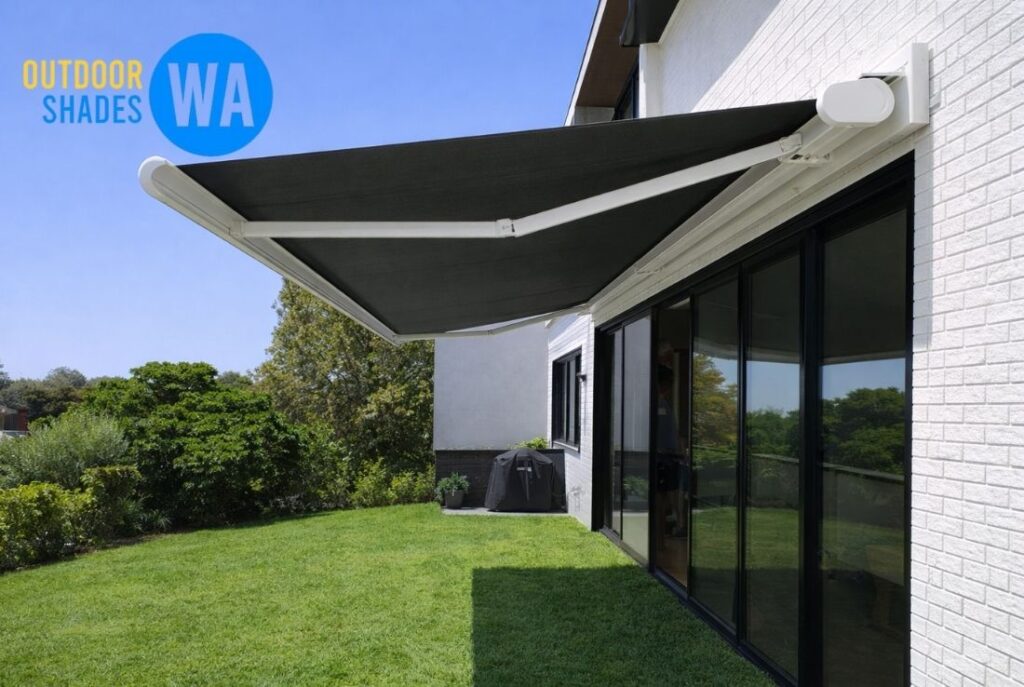
- Folding arm awnings extend overhead coverage, reducing direct wind impact.
- Motorised outdoor blinds can be adjusted quickly to suit changing wind conditions.
These don’t replace your outdoor blinds — they support them by controlling wind before it becomes a problem.
Look at Wind Direction Patterns
Watch the direction the wind tends to blow. In other cases, a simple relocation of furniture, a privacy wall, and outdoor elements can be moved to stop blinds from banging without significant modifications.

Choose the Right Fabric or Material
When you are trying to stop blinds from banging, the material you choose is just as important as the hardware.
Different materials do not respond to the wind in the same way, and the correct weave or weight can be a significant factor.
Lightweight Fabrics
These are common in basic outdoor blinds and work fine in mild weather.
But because they’re lighter, they tend to flap or move more easily — not ideal if you’re trying to figure out how to stop roller blinds from banging in breezier areas.
Heavier Fabrics With a Tight Weave
Heavier materials reduce unwanted movement because they don’t lift as easily.
A tighter weave also lets less wind through, helping you stop blinds from banging without needing extra accessories. Great for semi-exposed patios or verandas.
Quality Mesh Designed for Wind Resistance
When it comes to finding the best outdoor blinds for wind and rain, high-quality outdoor mesh fabrics are the top choice for wind-prone areas.
They balance airflow and stability — enough breeze can pass through to reduce pressure, but not so much that the blind vibrates constantly.
A strong, reliable option in this category is Vistaweave or Visiontex, known for durability and wind control.
Perfect if you’re dealing with ongoing issues and want a long-term solution for how to stop blinds from banging in open outdoor spaces.
Consider Upgrading to More Stable Outdoor Shade Systems
Sometimes, the easiest way to stop blinds from banging is to admit that the blinds themselves just aren’t built for your conditions. Here’s a quick way to work out whether an upgrade makes sense.
Are Your Blinds Just Old or Worn Out?
If the fabric is stretched, the tracks are bent, or the bottom rail isn’t sitting straight, even the best fixes might not hold.
Older blinds often struggle in the wind, no matter how many adjustments you make.
If this sounds like your setup, upgrading could solve the ongoing battle of how to stop roller blinds from banging once and for all.
Do Your Blinds Suit Your Environment?
Some blinds simply aren’t designed for windy patios, open decks, or coastal homes.
If you live in a high-wind area, lighter or basic blinds may never stay stable enough to stop blinds from banging consistently.
A stronger, purpose-built system will handle the conditions far better.
Could Complementary Shade Systems Improve Stability?
Sometimes the best upgrade isn’t just new blinds — it’s improving the whole outdoor setup.
Options like outdoor shade products or more enclosed systems can reduce wind impact and improve overall blind performance.
If You Answered “Yes” to Any of These…
An upgrade might be more effective (and less frustrating) than ongoing fixes.
Stronger, modern outdoor blind systems stay stable, handle wind better, and dramatically reduce noise.
Maintenance Tips to Keep Blinds Quiet
Keeping outdoor blinds quiet isn’t a one-time fix — a little ongoing care goes a long way. Use this simple schedule to prevent rattling, shaking, and banging before it starts.
Monthly
Give your blinds a fast visual once-over every few weeks.
Look for:
- Loose screws on brackets
- Wobbly bottom rails
- Slack in cords, tracks, or tension systems
Catching these early stops, small issues from turning into the kind of movement that makes blinds noisy in the wind.
Every Few Months
Dust, grit, and salt (especially near the coast) can make blinds stick or jerk — movements that can lead to banging.
A simple routine helps:
- Wipe tracks and bottom rails with mild soapy water
- Rinse gently and let dry
- Add a silicone-based lubricant to tracks or moving parts
- Avoid oil-based sprays (they attract grime)
This keeps everything sliding smoothly and reduces sudden jolts that create noise.
During Extreme Weather
Strong winds, storms, or heavy gusts can push even well-maintained blinds around. When the forecast looks rough:
- Roll the blinds up fully
- Use any locks or straps to secure them
- Clear nearby furniture or objects that could hit the blinds
Storing blinds during severe conditions is one of the most effective ways to prevent damage — and avoid future banging caused by warped or stretched components.
When to Call Outdoor Shades WA
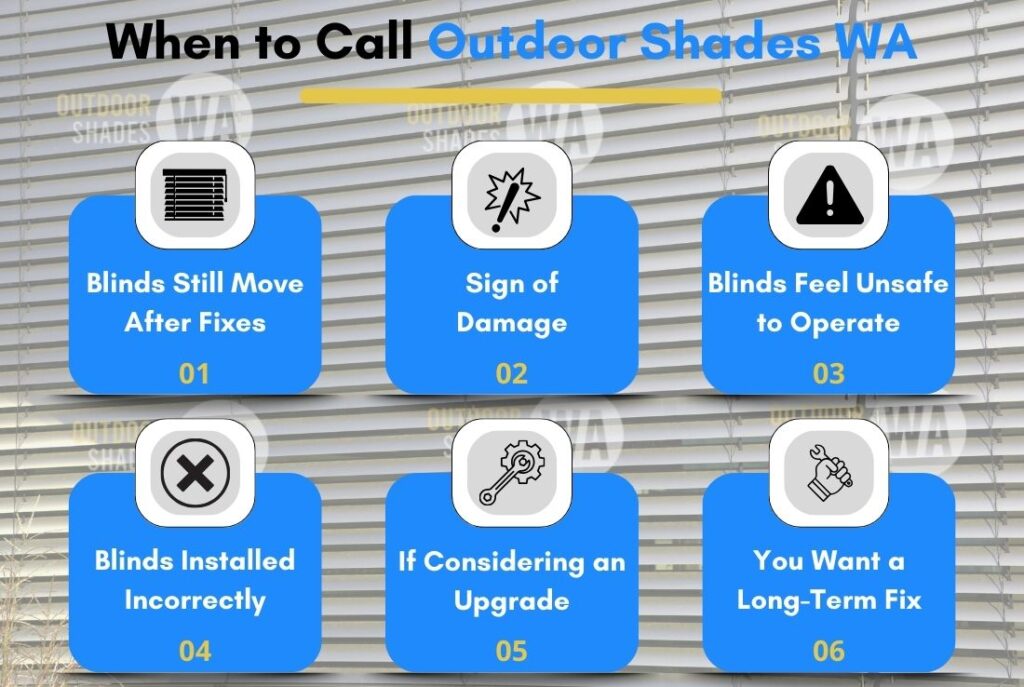
Even with all the DIY tricks, there are moments when bringing in an expert is the safest and most effective way to stop blinds from banging. Here’s how to know when it’s time to hand things over to Outdoor Shades WA.
When It Still Happens Even After the Fixes
If you’ve tightened tensioners, added weights, checked fittings, and you still can’t figure out how to stop roller blinds from banging, it’s likely a deeper structural issue.
Outdoor Shades WA can check alignment, track function, fabric condition, and mounting surfaces — things that aren’t always obvious without experience.
There’s Any Sign of Damage or Warping
Bending, cracking, stretched fabric, sagging rails, or blinds popping out of their tracks are all red flags.
Trying to repair these on your own can make the problem worse or unsafe.
The Blinds Feel Unsafe to Operate
If operating the blind feels stiff, stuck, uneven, or unpredictable, a professional should step in.
Outdoor Shades WA can safely assess mechanisms, springs, tracks, and locking systems — avoiding injury or further damage.
You Suspect the Blind Was Installed Incorrectly
Incorrect installation is a common hidden cause when homeowners can’t figure out how to stop window blinds from banging in windy areas.
An expert can identify misalignment, poor mounting points, or incorrect tension setups and fix them properly.
You’re Considering an Upgrade
If your blinds are old, unsuited for your environment, or repeatedly noisy, Outdoor Shades WA can recommend stronger systems or modern track-guided solutions that naturally stop blinds banging in wind-heavy areas.
You Want a Longer-Term Solution, Not Temporary Fixes
Sometimes you don’t just want to reduce the noise — you want to eliminate the problem.
Professionals can guide you on the best materials, installation method, and outdoor blind system type for lasting quiet and stability.
Conclusion
Most banging, rattling, and wind-related issues can be fixed with the right approach. There’s always a practical way to get your blinds running quietly and smoothly again.
If you want long-term peace of mind, investing in stable, high-quality outdoor blinds is absolutely worth it. Reliable systems don’t just reduce noise — they last longer, look better, and make your outdoor space far more enjoyable.
If you’re unsure where to start or you’d rather have a professional take a look, Outdoor Shades WA is here to help. We can assess your current setup, recommend the right fix or upgrade, and make sure your blinds stay quiet no matter how windy it gets.
Contact us and see how we can make a difference.