

Many homeowners install outdoor blinds to improve comfort, privacy, and weather protection—but far fewer realise that ongoing care is what truly protects that investment.
No matter the types of outdoor blinds you choose, routine cleaning plays a critical role in maintaining performance and durability.
Outdoor blinds are constantly exposed to harsh environmental elements: dirt and dust, mould, salt build-up, debris, and pollution particles.
When these contaminants go untreated, they don’t just affect appearance—they also impact structural integrity.
I’ve worked with clients across Western Australia, and what I found is that the difference between a well-maintained system and a neglected one can be years of lifespan.
Maintaining outdoor blinds isn’t complicated—it just requires consistency and the right approach for the material.
In this guide, I’ll walk you through exactly how to clean your outdoor blinds properly and how to care for them so they continue performing at their best year after year.
Understanding Your Outdoor Blind Material
The first and most important step before diving into how to clean outdoor blinds is to understand what your blinds are made of.
Different materials require different cleaning methods. Applying the incorrect technique may shorten lifespan, affect clarity, or weaken structural components.
Outdoor blinds are available in a wide range of configurations, and understanding your material will help you choose the most effective maintenance approach while safeguarding your investment in quality outdoor blind products.
Fabric Outdoor Blinds
Fabric outdoor blinds are commonly made from woven synthetic materials, such as PVC-coated polyester mesh or solution-dyed acrylic.
Outdoor fabric blinds are usually made from woven synthetic fabrics.
These are UV-resistant and airflow materials that are also durable in outdoor environments.
Premium mesh fabrics like Vistaweave, Visiontex, and Sattler are designed to block UV rays while maintaining outward visibility and ventilation.
PVC & Clear Outdoor Blinds
Clear café-style blinds are usually made of flexible polyvinyl chloride (PVC), a thermoplastic polymer commonly used in construction and marine applications.
Because PVC is smooth and non-porous, cleaning processes differ significantly from those for fabric.
PVC is easily scratched and is likely to become cloudy when exposed to abrasive tools or when it comes into contact with the wrong chemicals.
Use no paper towels or stiff brushes, which may leave microscopic scratches that can irreversibly diminish its visibility.
Aluminium & Track-Guided Systems
Most outdoor blind systems use aluminium headboxes, bottom rails, and side tracks to make them strong and weather-resistant.
The popularity of aluminium in architecture stems from its resistance to corrosion and its high strength-to-weight ratio.
Aluminium forms a natural protective oxide layer that helps prevent rust and corrosion when exposed to the environment.
Track-guided systems like Ziptrak blinds are made from fabric or PVC, feature precision side channels, and use spring-balanced systems.
While aluminium is durable, dirt and debris accumulation in the tracks can affect performance.
Frequent maintenance contributes to smooth operation and the structural integrity of the tracks.
How Often Should You Clean Outdoor Blinds?
The next most frequent question homeowners ask, immediately after learning how to clean outdoor blinds, is how often maintenance should be performed.
The answer lies largely in your surroundings, your exposure to the elements, and the kind of blinds you have.
Outdoor blinds are usually cleaned every 3-6 months to keep them looking and performing well. However, this period can be reduced or prolonged greatly by environmental conditions.
General Recommendation: Every 3–6 Months
Routine cleaning every three to six months helps prevent:
- Dirt and dust buildup
- Mould growth
- Salt accumulation
- Staining and fabric degradation
Accumulated airborne pollutants and organic debris can accelerate the breakdown of materials when exposed to UV radiation and moisture.
Regular cleaning removes contaminants before they chemically interact with surfaces.
Coastal vs Suburban Environments
Your location plays a major role in determining cleaning frequency.
Outdoor blinds in homes located near the ocean must be cleaned every 2-3 months. Salt particles found in sea spray settle on surfaces.
Salt deposits are one of the primary reasons in causing corrosion and material deterioration of metals, and that they may also stiffen or cloud the surfaces of PVC over time.
In non-coastal settings, airborne pollutants such as dust, pollen, and vehicle emissions are the primary concern.
In these environments, cleaning every 4-6 months is usually adequate, except where the area is heavily tree-covered or construction is underway.
Signs Your Blinds Need Immediate Cleaning
Even if you’re following a schedule, certain warning signs indicate it’s time to clean sooner:
- Visible mould spots or mildew smell
- Sticky or gritty surface texture
- Cloudiness in clear PVC panels
- Difficulty rolling blinds up or down
- Discolouration or staining
Mould growth must be treated as early as possible. Moulds grow in damp, humid places and spread rapidly on porous materials.
When you find black or green spotting, then it is time to do something about it, especially if you’ve been researching how to clean outdoor mesh blinds or clear PVC surfaces.
Does Cleaning Frequency Affect Waterproofing?
Regular maintenance is also used to maintain protective coats and water resistance.
Outdoor blinds are waterproof, but it depends on the material: even treated fabrics or waterproof PVC can lose their performance if dirt and mould accumulate on the surface.
Ultimately, cleaning your outdoor blinds regularly will help extend their lifespan and reduce the need for premature replacement.
Step-by-Step Guide: How to Clean Outdoor Blinds
If you are seeking an effective, safe way to clean outdoor blinds, it is advisable to take a systematic approach.
When it comes to preserving your fabric, mesh, or PVC systems, all that matters is to be gentle and avoid harsh chemicals.
What You’ll Need
Before starting, gather the following items:
- Mild soap or pH-neutral detergent
- Soft sponge or cloth
- Bucket of lukewarm water
- Hose (low pressure only)
- Microfibre towel
When learning to clean outdoor roller blinds, it is important to use the right tools, as abrasive brushes or harsh detergents may damage the fabric covering or leave scratches on the PVC surfaces.
General Cleaning Process
This process applies to most blind types, including mesh and PVC.
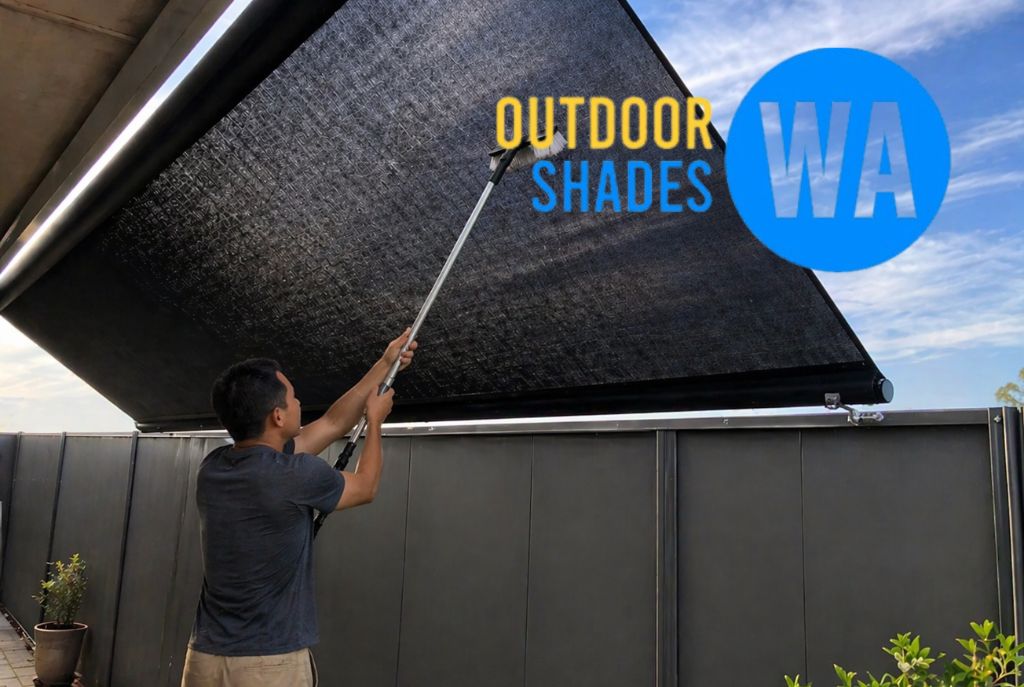
- Fully extend the Blinds – Always extend the blinds completely before cleaning. This will take care of even washing and prevent uneven drying or trapped moisture.
- Brush Off Loose Dirt and Debris – Use a soft brush to remove dust, cobwebs, pollen, and leaves gently. In PVC, it is best to remove grit at the first stage to avoid scratching the surface during wiping.
- Gently Wash with Mild Soap Solution – Mix a small amount of mild detergent into lukewarm water. Using a soft sponge or cloth:
- Wipe fabric or mesh gently.
- Clean PVC panels carefully without excessive pressure
- Avoid scrubbing aggressively
- Rinse Thoroughly – Use a low-pressure hose to wash away soap residue. Washers with high pressure are not recommended because they might damage the fabric fibres and push water to the seams or track systems.
- Air Dry Completely Before Retracting – Let the blinds completely dry in the extended position. Rolling up wet blinds provides the perfect environment for mould.
How to Clean Specific Blind Types
While the general method works for most systems, certain designs require extra attention.
Although the general approach applies to most systems, some require additional consideration.
Straight Drop Blinds
Straight drop blinds are simple, vertically hanging systems without side channels.
When cleaning:
- Pay extra attention to the bottom rails, where dirt often accumulates.
- Ensure the area around guide wires or straps is clean.
- Check that the base is free from grit before rolling up.
Because these blinds move freely, there is a risk of debris piling up at the bottom, leading to uneven rolling or fabric wear over time.
Roof-to-Fence Blinds
Roof-to-fence blinds provide greater protection against wind and environmental debris and offer greater vertical coverage.
When cleaning:
- Wash from top to bottom to prevent streaking
- Rinse in sections to avoid soap drying on the surface
- Inspect mounting brackets and fasteners for stability
Due to their size, cleaning in smaller sections helps maintain control and ensures thorough rinsing.
Folding Arm Awnings
Folding-arm awnings should be approached a little differently due to their retractable arm mechanisms.
When maintaining these systems:
- Clean the underside of the fabric as dust accumulates there
- Check moving arms for dirt, leaves, or insect nests
- Ensure joints and pivot points are free from debris
If you’re researching how to clean outdoor roller blinds, remember that folding-arm awnings have similar fabric maintenance rules; however, they require more mechanical inspection.
How to Remove Mould and Stubborn Stains
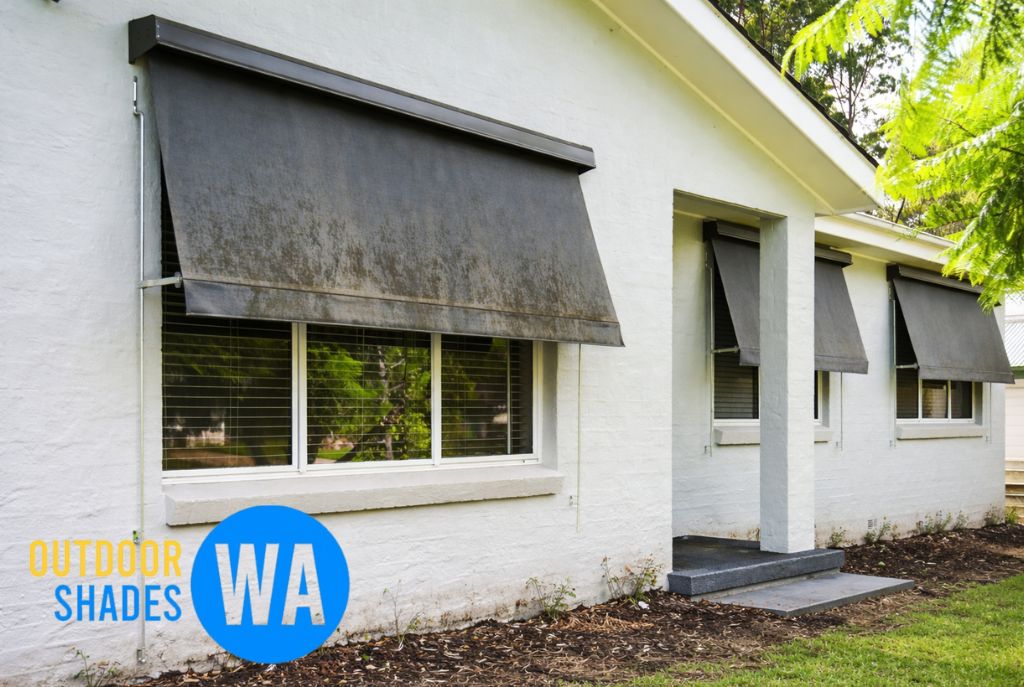
Some of the most frequent problems homeowners have when cleaning outdoor blinds are mould and hard-to-remove stains.
Since outdoor blinds are always exposed to moisture, dampness, dust, and organic debris, they may become a perfect environment for fungal growth if not well cared for.
Learning the reasons why mould appears, and what you can do to remove it without damaging your blinds, will be a great way to protect both the appearance and lifespan of your blinds.
Why Mould Forms on Outdoor Blinds
Mould grows in places where three conditions exist: moisture, organic material, and insufficient airflow.
Mould growth occurs when materials are kept damp for 24-48 hours or more in wet conditions.
If you’re specifically searching for clean mould off outdoor blinds, the cleaning process will be reliant on the material.
Although bleach is widely used to remove mould in your home, not all outdoor blinds can be treated with bleach.
Chlorine bleach may compromise the integrity of synthetic fibres, leading to colour loss and reduced tensile strength over time. It can also remove the water-repellent treatments of outdoor materials.
Bleach can also damage stitching, which may be made from different thread materials than the main fabric panel.
For PVC blinds, bleach may cause discolouration or surface brittleness if not properly diluted.
Removing mould is only half the solution. Preventing it from returning is equally important.
Always dry blinds fully before retracting after cleaning.
Controlling moisture is the best preventive measure against mould recurrence. Leaving surfaces dry deprives the spores of a favourable environment in which to grow again.
Maintenance Tips to Extend the Life of Outdoor Blinds
While deep cleaning only removes dirt and mould, preventive care helps protect mechanical parts, maintain materials, and minimise the long-term cost of repairs.
Outdoor blinds are constantly exposed to UV radiation, wind pressure, debris, and water, all of which cause wear over time.
Following a simple maintenance routine can significantly extend their lifespan.
Establish a Regular Dusting Schedule
Dust, pollen, and pollution particles may look harmless; however, when mixed with moisture, they can form a residue that deteriorates surfaces over time.
Airborne particulate matter can settle on exterior surfaces and react with moisture, accelerating surface wear.
Regular removal reduces this risk.
Lubricate Tracks and Moving Components
Track-guided and roller systems rely on smooth mechanical operation. An accumulation of dirt within side channels may lead to friction, imbalanced rolling, or tension on internal springs.
Mechanical wear caused by the lack of regular lubrication of exterior moving parts can be minimised, thus preventing corrosion in outdoor conditions.
This is particularly useful in larger roller systems, where smooth running is necessary to avoid early wear on motors or springs.
Proper Storage During Extreme Weather
Extreme weather conditions can place excessive stress on outdoor blinds.
Retractable exterior installations need to be secured or retracted when strong winds are expected to minimise structural stress and potential damage.
How to Stop Blinds from Banging in Windy Conditions
Wind noise or wind impact damage is one of the most widespread maintenance issues. To stop blinds from banging, addressing movement is crucial for both comfort and longevity.
Repetitive wind loading may, over time, compromise the fasteners and exterior attachments.
To reduce movement:
- Ensure bottom rails are properly tensioned
- Use tie-down straps where appropriate
- Install guide channels or wind locks
- Retract blinds in high winds
Reducing impact stress not only improves comfort but also preserves structural integrity.
Preventative Care Tips
While understanding how to clean outdoor blinds is essential, preventative care will minimise the need for deep cleaning and help preserve your blinds against premature deterioration.
Outdoor blinds are continuously exposed to organic debris, pollutants, UV radiation, and weather extremes. A proactive approach can greatly increase their lifespan and help retain their looks and output.
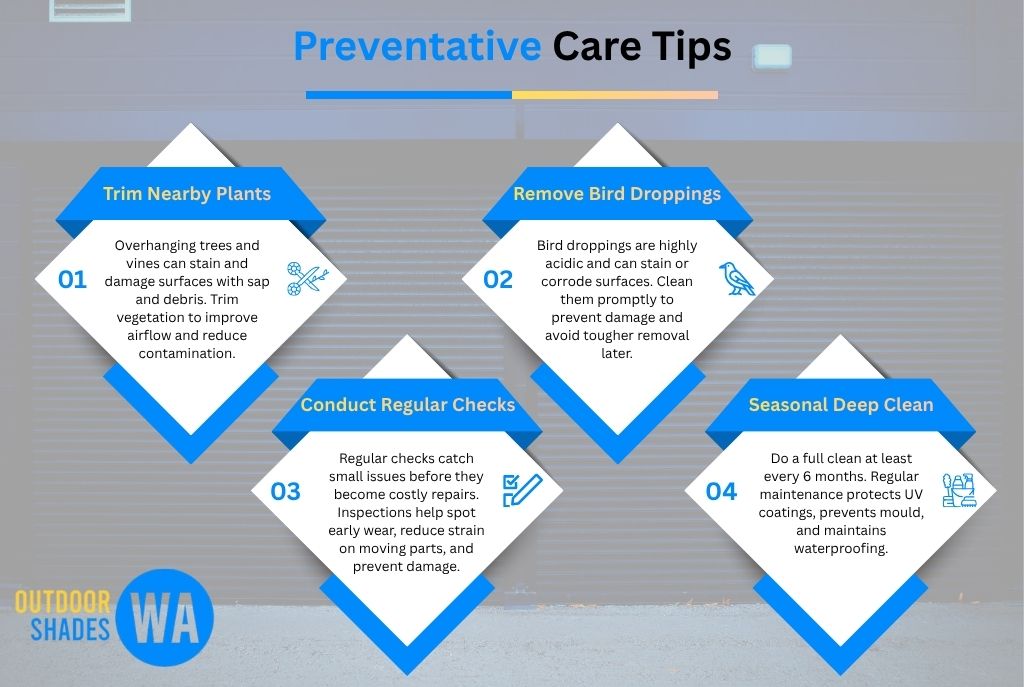
Trim Nearby Plants
Overhanging trees, climbing vines, and shrubs around the home may cause more damage than most homeowners realise.
Organic compounds in plant debris and tree sap can discolour synthetic materials and promote bacterial growth.
Keeping vegetation trimmed back improves airflow and reduces surface contamination.
This is particularly necessary when you are keeping clear PVC, because scratches and scuffs are more noticeable on transparent materials.
Remove Bird Droppings Quickly
Bird droppings are highly acidic and can stain or corrode materials if left untreated. Uric acid in bird waste has the potential to chemically interact with surfaces, especially when it is in the presence of heat and sunlight.
Prompt intervention reduces the strain of a more vigorous process to remove the stain in the future.
Conduct Regular Inspections for Wear and Tear
Routine checks will help you detect minor problems before they become expensive repairs.
We suggest seasonal exterior inspections of outdoor installations to detect the onset of degradation at an early stage.
Early detection reduces strain on moving components and prevents structural damage.
Seasonal Deep Cleaning Checklist
Besides regular dusting, have a full clean-up of the place at least once every 6 months. Seasonal transitions—such as before summer and after winter—are ideal times.
Regular maintenance will ensure UV coatings are preserved, prevent mould growth, and maintain waterproofing.
Why Preventive Care Makes a Difference
Preventative maintenance supports:
- Longer material lifespan
- Reduced mould growth
- Improved mechanical performance
- Clearer PVC visibility
- Lower long-term repair costs
With routine, cursory inspections, environmental management, and seasonal deep cleaning using proper techniques for cleaning outdoor blinds, your outdoor shading system can last much longer.
Make Your Outdoor Blinds Look Its Best for Years to Come!
Proper care is what separates blinds that last five years from blinds that last fifteen. No matter the type of outdoor blind you have installed, the fundamentals remain the same: clean them gently, dry them thoroughly, inspect them regularly, and protect them from unnecessary environmental stress.
If you’re considering upgrading or replacing your blinds, it’s also worth exploring different materials and system designs to suit your environment. The right product choice from the beginning plays a major role in long-term durability and performance.
At Outdoor Shades WA, we don’t just supply blinds—we help homeowners choose the most suitable solution for their space, climate, and lifestyle.
From consultation and custom sizing to professional installation, our team ensures your outdoor blinds are built to perform and installed correctly from day one.
If you’d like expert advice, a quote, or guidance on maintaining your current system, get in touch with us today.
Let’s make sure your outdoor space stays protected, functional, and looking its best for years to come.