

Outdoor living spaces are an important part of many Australian homes.
Patios, balconies, and alfresco areas are often used for entertaining guests, enjoying family meals, or simply relaxing outdoors.
However, strong winds, heavy rain, and harsh sunlight can quickly disrupt these spaces.
Over the years, working with outdoor shading solutions, I’ve seen how easily outdoor areas can become unusable during bad weather.
However, over the years working with outdoor shading solutions in Perth, I’ve seen that even well-designed patios can struggle to provide sufficient protection against wind-driven rain or intense sunlight.
This is why many homeowners look for the best outdoor blinds for wind and rain.
In this guide, I’ll walk through the key things to consider when choosing the best outdoor blinds for harsh weather conditions.
We’ll cover the essential features that make weatherproof/waterproof outdoor blinds effective, explore the different types of blinds available, and look at fabric options that influence durability, visibility, and overall performance.
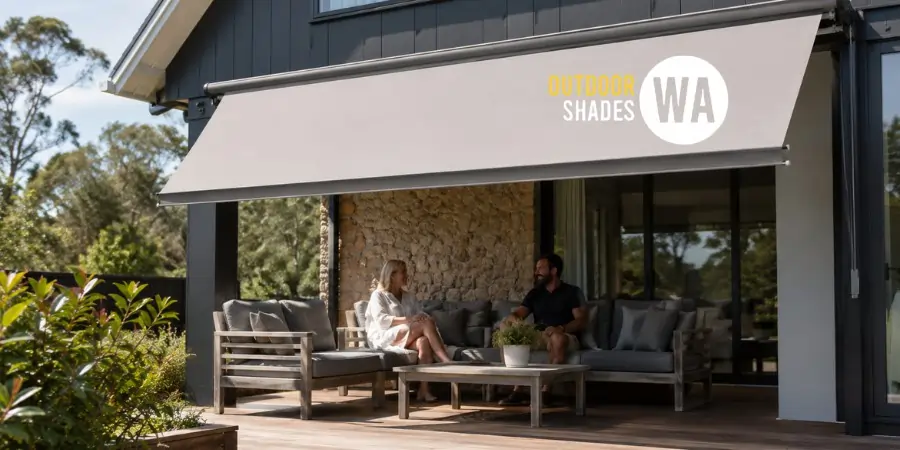
Why Choosing the Right Outdoor Blinds Matters
The Australian way of life involves outdoor living, patios, verandahs, and alfresco areas, and has been the norm for entertaining and relaxation.
However, the Australian climate is unpredictable. Strong winds, heavy rain, and harsh sunlight can quickly render outdoor areas intolerable or unusable without adequate protective measures.
Selecting the best outdoor blinds for wind and rain helps you ensure that the outdoor space remains comfortable and functional at all times.
Here’s how harsh weather affects outdoor spaces:
Rain Damage
One of the greatest problems with outdoor living areas is rain. Long-term exposure of outdoor furniture to moisture might result in soaked furniture, damaged cushions, and gradual decay of timber decking or patio flooring.
Properly installed outdoor waterproof blinds can help limit moisture exposure to walls, flooring, and other outdoor appliances.
Strong Winds
Wind is as disruptive as rain, particularly in coastal or open suburban settings.
Powerful winds may shift rain sideways into covered areas, topple furniture, and make outdoor gatherings unpleasant.
Sun and Heat Exposure
Australia’s strong sun can also affect outdoor comfort. Direct sunlight can cause glare and heat buildup in patios, verandahs, and outdoor entertainment areas.
Weatherproof outdoor blinds of high quality help minimise solar glare and also provide shade.
Do outdoor blinds reduce heat?
Outdoor shading devices can be highly effective in enhancing thermal comfort and reducing cooling requirements.
External shading systems can reduce cooling requirements by more than 60% in sunny climates by preventing solar heat loss to the building.
Due to these advantages, most homeowners nowadays install outdoor weatherproof blinds not just to protect their homes from rain but also to help them control heat and glare.
How the Right Outdoor Blinds Improve Your Space
- Weather Protection: High-quality weatherproof outdoor blinds are resistant to rain, wind, and other harsh weather conditions.
- Improved Privacy: Outdoor blinds can be used as effective outdoor weather screens to reduce visibility to neighbouring properties while still allowing air to pass and filtered light to enter.
- Better Energy Efficiency: Weatherproof outdoor blinds can reduce the amount of heat that gathers around the home by preventing sunlight from reaching the windows and the rest of the outdoors.
- Year-Round Outdoor Use: Patios and verandahs can be used year-round with the right blinds. You are no longer forced to stay indoors because of rain, wind or the strong sun.
Because every home and environment is different, there are different types of outdoor blinds to fit particular conditions. Being aware of these alternatives can help you select the best outdoor blinds for wind and rain to fit your site, outdoor design, and weather conditions.
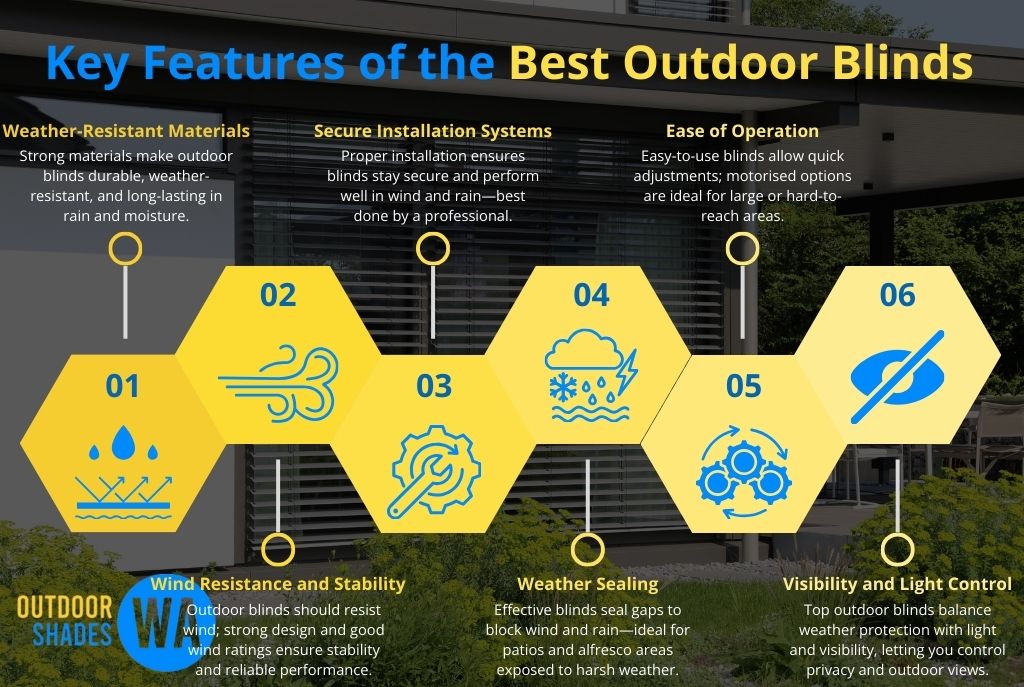
Key Features of the Best Outdoor Blinds for Wind and Rain
When choosing the best outdoor blinds for wind and rain, one must consider not only the blinds’ appearance but also features that enhance their ability to withstand harsh weather.
High-quality blinds are designed with specialised materials, secure installation systems, and operating mechanisms suitable for outdoor conditions.
Weather-Resistant Materials
The material used is one of the most significant aspects in the performance of the best outdoor blinds for wind and rain.
Blinds intended to be used in severe weather conditions are usually made out of materials and structural parts that can resist long-term exposure to sunlight, precipitation, and even moisture. These materials allow for extending the lifespan of outdoor blinds without compromising their appearance or integrity.
Wind Resistance and Stability
Outdoor blinds installed in open spaces must withstand wind pressure without flapping, sagging, or detaching.
Well-designed systems have characteristics that enhance structural stability, stopping blinds from banging. Another important factor to consider is the outdoor blinds’ wind rating, which indicates a blind system’s performance at specific wind speeds.
Secure Installation Systems
Even the strongest blind materials cannot perform well if not installed correctly. Blinds that are mounted securely stay in place and work during windy or rainy seasons.
These components should be fitted by a professional to ensure they are in good order.
Weather Sealing
Weather protection cannot be effective by merely lowering a blind. The design should reduce openings through which the wind or rain can enter the space.
These characteristics come in handy, especially on patios and alfresco areas, where wind-driven rain is common.
Ease of Operation
Outdoor blinds must be user-friendly so they can be opened and closed quickly when the weather changes.
Motorised systems are particularly helpful for bigger installations or blinds that are hard to access.
Visibility and Light Control
The best outdoor blinds for wind and rain must be weather-blocking and allow natural light and visibility when required. The right materials are able to strike a balance between protection and outdoor scenery.
These options give you the freedom to develop your outdoor area according to the degree of security and visibility you desire.
Best Outdoor Blinds for Wind and Rain
When choosing the best outdoor blinds for wind and rain, you should also consider the blind system type and material, as well as the installation method.
Various designs are constructed to accommodate varying levels of wind exposure, rain protection, and sun protection.
Being aware of the most common options will allow you to select weatherproof outdoor blinds that suit your patio, verandah, or outdoor entertainment space.
Zip-Guided Blinds
A zip-guided blind, like a ziptrak blind, is one of the most common choices for exposed outdoor areas. These blinds feature a track system that locks the fabric along the sides, forming a smooth, secure enclosure.
Due to their guided structure, these systems are common outdoors as windproof outdoor blinds, especially in coastal areas or high-rise houses.
Straight Drop Blinds
Straight drop blinds are a simple, versatile solution commonly used on patios, verandahs, and pergolas. The blind itself falls straight down and may be attached to the bottom using straps, clips, or anchors.
Straight drop blinds, when fitted with strong fabrics and anchors, can be made a very stable outdoor weatherproof blind in most residential outdoor blinds.
Outdoor Roller Blinds
Another popular choice in Australian homes is the outdoor roller blinds. These systems work the same as indoor roller blinds, except they are made of tougher materials and use heavier mounting hardware for outdoor use.
Many weatherproof outdoor roller blinds are designed to act as outdoor weather screens, helping reduce wind, glare, and light while maintaining airflow.
Café Blinds
Café blinds have been widely used by homeowners who want to cover their outdoor spaces while keeping them visible. These blinds are normally made from clear or coloured PVC that lets light through while keeping out wind and rain.
Due to their stiffness, Café blinds are sometimes installed as waterproof patio blinds, offering great protection even in wet weather.
Roof-to-Floor Enclosure Systems
There are also outdoor areas that must be fully enclosed to ensure they are well protected from wind and rain. If you are considering ways to enclose a patio, systems such as roof-to-fence blinds can provide complete vertical coverage from the top of the structure to the ground.
Made from durable materials, these systems can serve as waterproof outdoor blinds that keep rain and wind out.
Retractable Shading Systems
Retractable systems offer homeowners flexibility for shade and weather protection without permanently enclosing the outdoor space.
Solutions such as folding arm awnings, which can extend to provide shade and light rain protection, then retract when not needed.
These systems are frequently combined with weatherproof outdoor blinds to create adaptable outdoor living spaces.
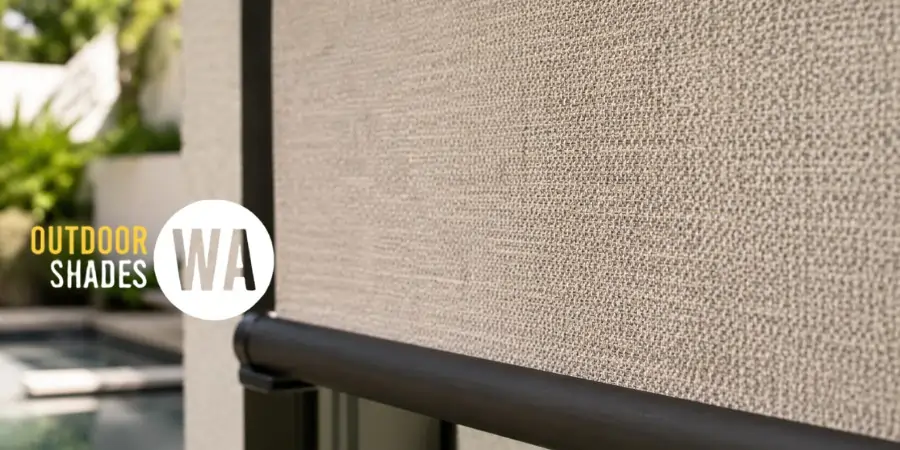
Choosing the Right Fabric
One of the most critical criteria in selecting outdoor blinds is the fabric, as it directly affects how well the system performs in wind, rain, and sun exposure.
The appropriate material will enhance the durability, minimise heat and glare, and make your outdoor area comfortable in changing weather.
When searching for the best outdoor blinds for wind and rain, the available fabric selections can play a crucial role in the long run.
Mesh Outdoor Blind Fabrics
Mesh fabrics are commonly used for outdoor weather screens, particularly in areas with regular airflow.
- Mesh materials filter sunlight while still allowing air circulation.
- Air can pass through the fabric, helping prevent excessive strain on the system.
- Mesh designs maintain outward visibility while reducing visibility from outside.
Due to these characteristics, mesh fabrics are used in wind-resistant outdoor blinds for open patios or coastal houses.
Waterproof and PVC Fabrics
Solid PVC or coated fabrics are usually homeowners’ favourites for rain protection.
Advantages include:
- Solid materials that block rain completely
- Ideal for patios or outdoor dining areas where weather protection is essential
- Provide a full weather enclosure when installed with guided tracks or zip systems.
These materials are typically applied in outdoor waterproof blinds where maximum protection against wind-driven rain is required.
Acrylic Outdoor Fabrics
Other popular fabrics for outdoor shading systems include acrylic. They are commonly used in awnings and weatherproof outdoor blinds due to their long-lasting performance.
Their main benefits include:
- High durability and colour stability even under strong sunlight
- Excellent UV resistance that helps protect outdoor furniture from fading
- Breathable material structure, which helps reduce heat build-up in covered spaces
Because of these properties, acrylic materials are commonly used in weatherproof/waterproof outdoor blinds designed for long-term outdoor exposure.
Fabric Examples
Vistaweave, Visiontex, and Sattler are among the premium outdoor blind fabrics that manufacturers use.
These fabrics are tailored for outdoor use and are known for their durability, UV protection, and resistance to long-term weather exposure.
Many systems built with these materials are used in windproof outdoor blinds and other high-performance shading solutions.
Outdoor Blind Installation Considerations
Even the strongest outdoor blinds cannot perform well when not installed properly. Proper installation significantly enhances the blinds’ resistance to wind, rain, and daily exposure to the elements.
Whether it’s about choosing the correct mounting points or ensuring the correct measurements, planning will help ensure that your outdoor blinds offer the much-needed protection and long-term durability.
Why Proper Installation Improves Wind Performance
The best outdoor blinds for wind and rain should withstand constant wind pressure. Securely attached and well-tensioned blinds are much less prone to flapping, hanging, and tearing during severe winds.
This is especially essential in areas of Australia where strong coastal winds or sudden storms are common.
Structural Mounting Points
The performance of the blinds is directly proportional to the strength of the structure in which the blinds are mounted. Outdoor blinds must be attached to solid structures at all times, not to lightweight structures.
Attaching the blinds to well-built structures ensures that the tension and wind loads exerted on the system are carried by the brackets and tracks.
Measuring Correctly for Full Coverage
The next factor to consider when using outdoor blinds is accurate measurements to ensure full protection from wind and rain. Ineffectively sealed blinds may have holes that allow water and wind into the area.
Proper measurements are also used to ensure the blinds work and close properly when fully lowered.
Related: How Much Clearance is Needed for A Retractable Awning
Importance of Professional Installation in Windy Climates
Although outdoor blinds can be installed as a DIY project, they still require professional installation for optimal performance. Established installers know how to position the blinds in the most stable way and can fix all parts in the right place.
Local expertise can be a major factor in selecting and installing outdoor blinds that are well-suited to the local climate.
Don’t Let Wind and Rain Limit Your Outdoor Living!
Choosing the right outdoor blinds is essential for protecting your patios, balconies, and alfresco areas from Australia’s unpredictable weather.
Selecting the right type of blind, combined with durable fabrics and professional installation, ensures your outdoor areas remain functional and enjoyable regardless of conditions.
When choosing the best outdoor blinds for wind and rain, consider several factors. The right combination can make a huge difference in both performance and longevity.
At Outdoor Shades WA, we specialise in helping homeowners find the ideal outdoor shading solutions for their unique spaces.
We can guide you through choosing the best outdoor blind products, fabrics, and installation methods to match your needs and local conditions.
Don’t let wind and rain limit your outdoor living.
Contact us today to explore the full range of outdoor blind products and find the perfect solution to protect and enhance your outdoor space.