
Outdoor living is a big part of how we use our homes in Australia.
In Perth, that often means patios, decks, balconies, courtyards, and alfresco areas that look beautiful, but can feel too hot to enjoy once the afternoon sun kicks in.
That’s where awnings come in.
So, what is an awning?
It’s a practical shade cover mounted on the exterior of a home or building.
In this guide, I’ll walk you through what an awning is, the common types of awnings, how they compare with outdoor blinds, what fabrics and materials to consider, and what to check before installing one.
By the end, you’ll have a clear idea of what awnings are, where they work best, and what to think about before choosing one for your Perth home.
What Is an Awning?
So, what is an awning?
An awning is basically a shade that can be fastened to the exterior of a house or building. It typically hangs over a window, door, patio, balcony, or outdoor entertaining area. An awning is a roof-like cover that projects over or in front of a space for shelter.
An awning provides shade from overhead. It can help alleviate intense sunlight and glare, and make outdoor environments more comfortable, particularly during Perth’s hot afternoons.
Awnings can be:
- Fixed: These stay in place year-round. These are ideal for windows, doors, and areas that must always be covered.
- Retractable: They can be extended to provide shade when needed and folded inward for additional openness. Great for patios, decks, and outdoor spaces.
While simple, the right awnings can make a difference. Shading your home reduces unwanted heat gain, particularly around windows and outside areas, is important. To minimise the need for cooling, use adjustable shading (awnings and blinds) to keep the sun out.
So, if you’re wondering what awnings are before upgrading your outdoor area, think of it this way: an awning is a practical shade solution that helps turn a hot, exposed space into somewhere you actually want to sit, eat, relax, or entertain.
How Does an Awning Work?
Once we define an awning, it becomes easier to understand how it works.
At Outdoor Shades WA, I usually explain it like this:
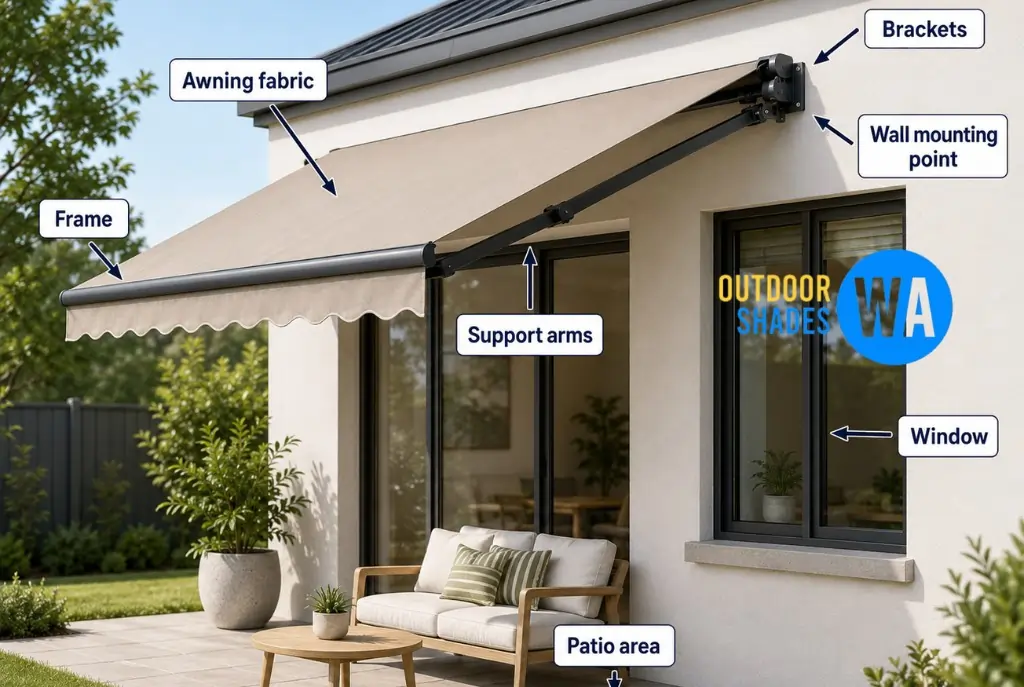
- The frame holds it. The frame is the structure that supports the awning.
- The fabric gives you shade. This is the part that blocks harsh sun, glare, and some weather exposure.
- The brackets and mounting points keep it secure. These attach the awning to the wall, fascia, or another suitable fixing point.
- The arms help it move. On retractable awnings, the arms extend outward when you want shade and fold back when you’re done.
There are hand-operated awnings via a crank. Others are operated by a motor, allowing them to extend or retract using a switch, remote, or control system.
Common Types of Awnings
Now that we’ve covered what an awning is, let’s talk about the main types you’ll usually come across.
Once you know what an awning is, you’ll want to learn about the most common types of awnings you’ll encounter.
I tell Perth homeowners this: Not all awnings perform the same. Some are made for everyday shade. Some are more suitable for windows. Others are designed for larger outside spaces.
Fixed Awnings
Fixed awnings stay in place year-round.
They’re suitable for locations where constant shade is required, such as unobstructed windows, front doors, walkways or small outdoor spaces. They are not foldable, so they must be set up right from the beginning.
Retractable Awnings
Retractable awnings can extend when you want shade and fold back when you don’t.
They’re useful for Perth patios and outdoor spaces, as you can adjust the amount of cover you need during the day.
Patio Awnings
Patio awnings are created for outdoor living rooms. Consider BBQ areas, outdoor dining, poolside seating, or that sunny corner you avoid. The right patio awning makes the space more usable without feeling claustrophobic.
Window Awnings
Window awnings are placed over windows to prevent sunlight from entering. That’s significant because external shading can help to cool homes by preventing sunlight from entering windows.
Freestanding Awnings
Freestanding awnings do not always have to be attached to the house. They may also be useful in areas of the garden where it is not possible to mount on a wall, for a swimming pool or for an outdoor seating area.
Folding Arm Awnings
Folding arm awnings are among the most popular types of awnings, a common choice for patios and alfresco spaces. They use arms that extend to hold fabric in place, then neatly fold them up when not in use.
What Is an Awning Used For?
After you grasp what an awning is, the next logical question is: What does an awning do around the home?
As outdoor blinds experts in Perth, we see awnings used mainly for one thing:
Making outdoor spaces easier to enjoy.
The sun in Perth can be a sight to behold, but by lunch hour, it can make a lovely patio a hot plate. An awning can provide shade over locations such as:
- patios
- decks
- balconies
- courtyards
- windows
- alfresco dining spaces
- outdoor seating areas
Where Awnings Help Most
Awnings are especially useful for:
- Reducing glare: Great near windows, sliding doors, and outdoor dining areas.
- Improving comfort: They can make a sunny deck or patio feel more relaxed and usable.
- Protecting outdoor furniture: Chairs, tables, cushions, and flooring can be protected from fading and excessive heat by reducing sun exposure.
- Managing north-facing and west-facing spaces: These areas can receive high levels of sunlight, particularly during the day.
Awning vs Outdoor Blinds: What’s the Difference?
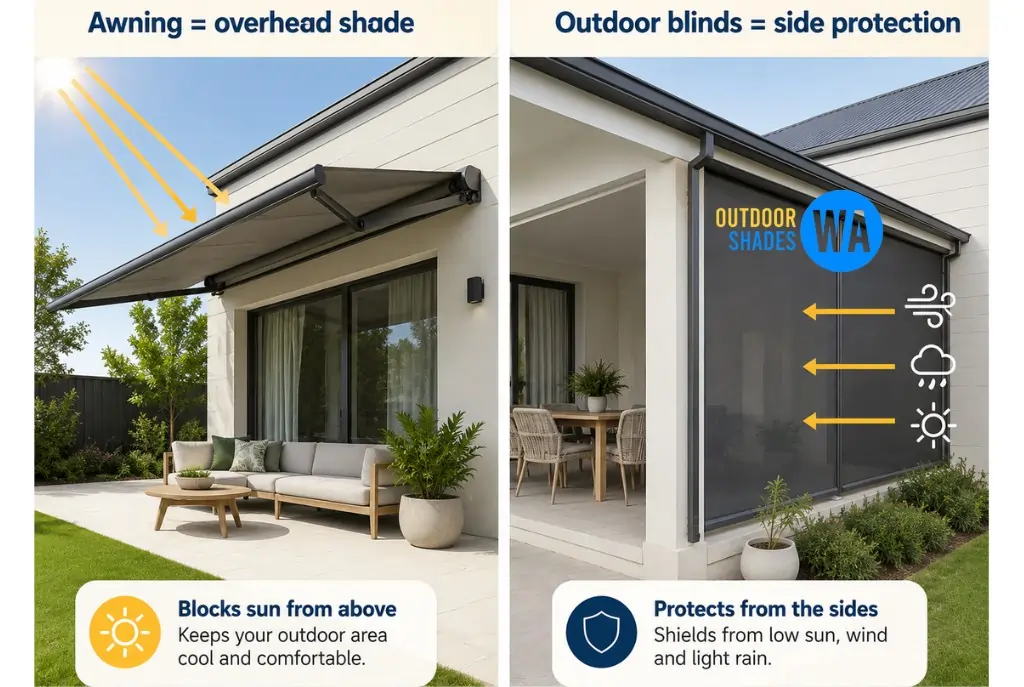
An awning gives you shade from above. Outdoor blinds protect the sides.
Simple as that.
An awning is typically installed over a window, door, patio, balcony, or any outdoor space with a structure overhead. It remains stationary and/or extends when shade is needed.
Its main job is to block the sun before it hits the space below.
This is also consistent with Australian energy recommendations. Shade structures, such as awnings, can prevent sunlight from entering the home, and shading keeps unwanted summer heat out.
Outdoor blinds are different.
These tend to fall vertically. They do not cover from above, but rather provide some protection to the sides of a space.
That’s why some Perth homeowners are comparing awnings to other types of blinds, such as ziptrak blinds, straight drop blinds, or roof-to-fence blinds. They are not necessarily equal, but they address comparable comfort issues.
Which One Do You Need?
Here’s the quick way to think about it.
If the predominant problem is sunlight from overhead, select an awning. Consider outdoor blinds when you have sun, wind, rain, or side privacy issues.
And yes, some homes require both. The top of the space can be shaded with an awning, and various types of outdoor blinds can close the sides to keep the hot midday sun from bothering you when the weather shifts.
Awning Fabrics and Materials to Know
Once you understand what an awning is, the next thing to consider is the material. This part is just as important as people believe. The fabric will impact the appearance, feel, performance, and longevity of your awning in our climate.
What Should You Look For?
The material used for the awning should withstand the elements and not just look pretty the first day. These are some of the key things to look at:
- UV resistance: Perth receives plenty of sun, so the material must be able to withstand regular exposure.
- Colour retention: Some fabrics will fade more rapidly than others. If the awning is exposed to the hot afternoon sun, this is worth asking about.
- Water resistance: All shade fabrics cannot be used as a shade in wet weather. Some are more tolerant of light rain, while others are primarily for sun protection.
- Breathability: A breathable fabric can help with airflow, which is useful for patios, decks, and alfresco areas.
- Ease of cleaning: Outdoor fabrics have to withstand dust, leaves, insects, and the weather. Easier to clean is always great.
Fabric Options You May Hear About
When we talk about the awnings and outdoor shade options, you might hear names such as Vistaweave, Visiontex, and Sattler.
These fabric options can offer varying levels of shade, privacy, ventilation, colour options, and weather resistance. The right option depends on the awning’s location and the amount of exposure the area receives.
Awnings in Wet Weather
Awnings are mainly about shade and shelter; however, this does not mean every awning cloth is waterproof.
For those looking for rain protection, a comparison between your awning and other solutions, such as waterproof outdoor blinds, may be helpful.
What to Consider Before Installing an Awning
Take a moment to take in the space before selecting an awning. Installing an awning can seem straightforward, but it needs to be done correctly.
Where Will It Be Fixed?
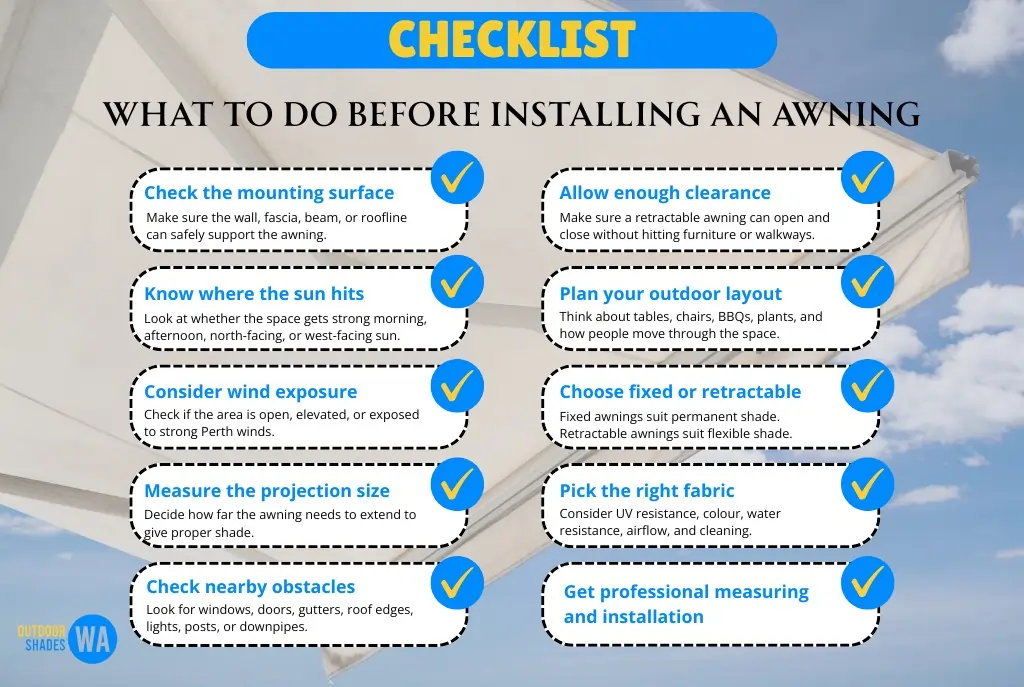
The first step is to inspect the wall, fascia board, roofline or structure that the awning is intended for.
The fixing point must be strong enough to securely hold the awning. This becomes even more important with larger awnings, as they can, in some instances, add additional load to the structure, particularly in the wind.
Where Is the Sun Coming From?
This is a big one.
If the heat is rising from above, an awning can be ideal. When the glare is from the side, consider outdoor blinds as well.
Australian energy advice also suggests shading windows and glass to help minimise unwanted summer heat gain.
How Much Space Do You Have?
Look at the size of the awning projection, doors, windows, gutters, posts, lights, and space around the edges of the roof.
For retractable styles, you will also need to consider the clearance required for a retractable awning. It should not overlap or fold over furniture, walkways, doors, or outside fittings.
Fixed or Retractable?
A permanent awning is best for locations that require shade year-round. A retractable awning is best for places that require flexibility. Provide shade when it’s hot. More sky when it’s mild.
Why Professional Measuring Matters
This is where it helps to have the right measuring. As with outdoor blinds installations, awnings must have proper anchors and clearances for safe use and be measured correctly.
Is an Awning Right for Your Outdoor Space?
So, what is an awning really good for?
From my perspective as an outdoor blinds expert in Perth, an awning is a great fit when your outdoor area needs shade above.
Think of spaces like:
- patios
- decks
- balconies
- windows
- sliding doors
- alfresco dining areas
If the sun is beating down overhead and it’s too hot to enjoy the outdoor area, an awning may be just what you need.
When an Awning Makes Sense
An awning works well when you want to:
- Create overhead shade: Perfect for sunny patios, decks, and outdoor seating areas.
- Reduce direct sun near windows: YourHome explains that shading can block direct sun and help reduce unwanted heat gain in Australian homes.
- Make outdoor areas easier to use: Energy.gov.au also recommends shade structures, such as awnings and shade sails, to help prevent sunlight from entering the home.
When Outdoor Blinds May Be Better
Outdoor blinds can be considered for side sun, wind, privacy, or rain, as these are potential issues that need to be addressed.
However, if you’re looking for just an overhead shade, then awnings it is. It’s a cover for practical purposes: creating a place where you want to be to provide shade from the sun.
Make Your Outdoor Space More Comfortable
So, what is an awning in the simplest sense? It’s a practical shade solution that helps make patios, decks, balconies, windows, and alfresco areas more comfortable in Australian conditions. Good shading can help block direct sun and reduce unwanted heat around the home.
Before choosing one, I’d always look at:
- sun direction
- fabric choice
- outdoor layout
- manual or motorised operation
- proper installation requirements
At Outdoor Shades WA, we can help you choose and install folding arm awnings and other outdoor blind solutions that suit your Perth home.
Ready to make your outdoor space more comfortable? Contact us for friendly advice and a shade solution tailored to how you use your home.