As an expert in outdoor blinds in Perth, often speak with homeowners who are comparing awnings vs canopies and wondering which one actually suits their space.
It is a fair question because awnings & canopies both provide shade and weather protection, but they differ in structure, purpose, installation, and long-term use.
An awning, such as a folding arm awning, is usually attached to the home, while a canopy may stand separately in the yard.
In Australia, where outdoor areas are exposed to strong sun, glare, heat, light rain, and sudden weather changes, the right choice can make a big difference to everyday comfort.
Before choosing between awnings and canopies, I always recommend looking at how the space is used day to day. A family patio used for weekend lunches will need a different shade solution from a poolside lounge, balcony, or west-facing window.
That is why the best answer is not always just canopy vs awning. It is about comfort, placement, weather exposure, and how the shade will work with your home in the long term.
In this guide, I will walk you through the differences between awnings and canopies, where each works best, and when outdoor blinds may be the smarter option before you invest in your outdoor space.
Key points to cover:
- Awnings and canopies both provide shade, but they suit different outdoor spaces.
- Awnings usually work best when attached to patios, decks, verandahs, or alfresco areas.
- Canopies may suit freestanding areas such as gardens, pool areas, or temporary entertaining spaces.
- Outdoor blinds may be better when side sun, wind, glare, rain, or privacy is the main concern.
Awnings vs Canopies: The Main Difference
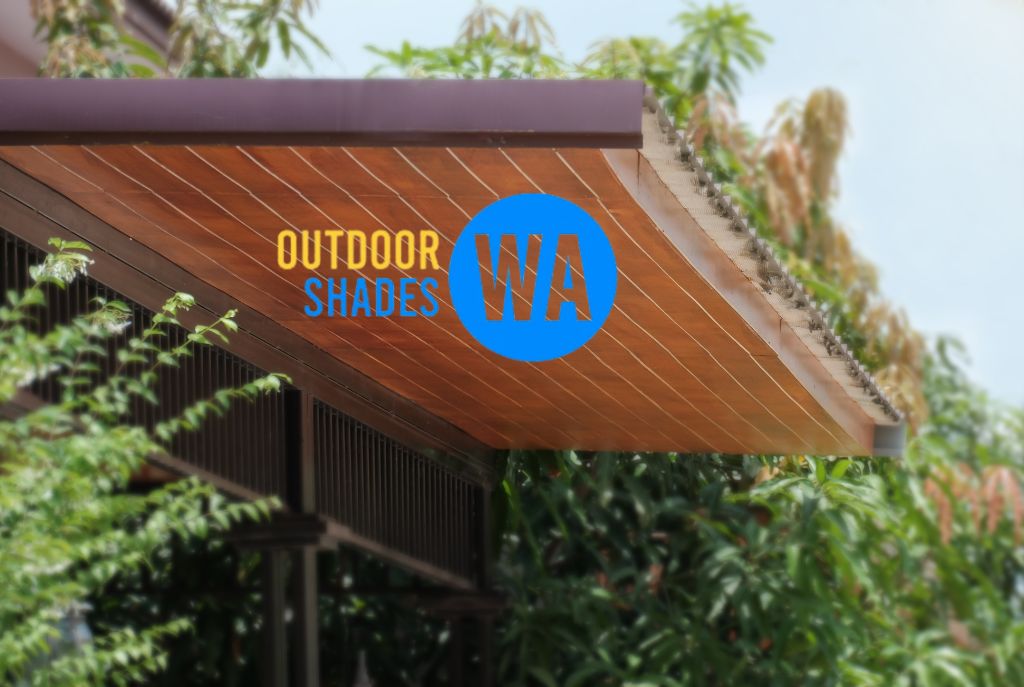
The most common difference that comes to mind when people ask me about awnings vs. canopies options is that an awning is likely attached to a wall or existing structure. In contrast, a canopy is likely freestanding or used as a new shade cover.
An awning can hang from the house and add a complete appearance to a patio, verandah or balcony. This is why an awning structure is sometimes more permanent and flawless than a loose shade structure.
But with a canopy, it is not like that. Canopies are less dependent. Cambridge defines a canopy as something that looks like a roof, providing shelter, making it ideal for any garden space, poolside seating, outdoor events, or use outside the house.
My simple advice? If you are connecting an outdoor area attached to your home, awnings tend to work best. For outdoor areas not attached to a building, freestanding canopies may be more convenient.
Where Awnings Work Best Around the Home
As I talk to homeowners about awnings vs. canopies, I typically ask whether the space is attached to the home. If so, an awning is often more appropriate.
Awnings work beautifully over:
- patios and decks
- balconies and verandahs
- sliding doors
- west-facing windows
- alfresco dining areas
It provides shade without the need for an extra stand-alone frame in the yard.
The difference becomes easier to discern once you understand what an awning is. Awnings seem to be a part of the house. Canopies are also good, but may be more appropriate for outdoor use.
Always make sure to research a retractable awning’s clearances before selecting. Consider the height of the mount, door swing, roofline, gutters, furniture arrangement and the distance to which the awning extends.
Where Canopies Work Best Around the Home
Canopies are not the backup option. They simply suit different spaces.
A canopy is most suitable when it is not built directly over the house. Consider poolside lounges, garden seating, children’s play spaces, outdoor events, temporary entertaining areas or car shade.
- Choose canopies for separate outdoor zones.
- Choose awnings & canopies only after checking the sun direction.
- Avoid assuming canopy and fixed awnings do the same job.
Suggested visual aid:
A side-by-side comparison graphic showing an awning attached to a house and a canopy standing separately in a backyard.
Awnings vs Canopy: Which One Gives Better Sun, Heat, and Weather Protection?
The best outdoor blinds for wind and rain will rely on your sun direction, roofline, wind exposure, and usage.
Awnings are great for providing overhead shade over patios, decks, windows, and alfresco spaces. Awnings tend to be more functional for attached outdoor spaces, since they work with the home.
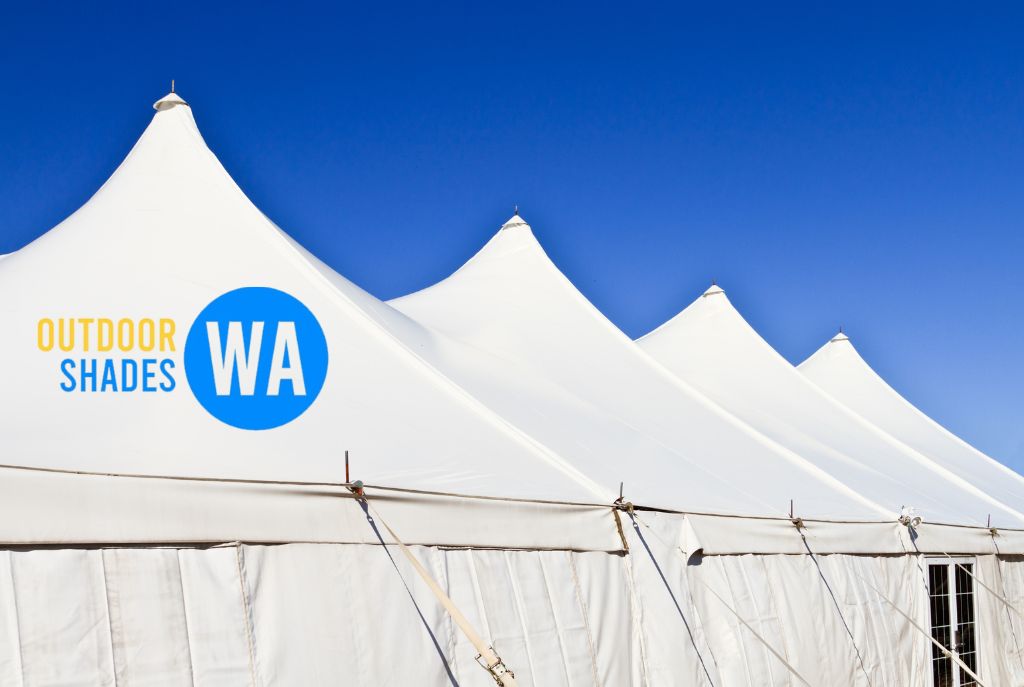
Canopies are different. These are for open spaces, such as a poolside chair, a corner of the garden, or a spot used occasionally for entertaining.
But here is what I often explain at Outdoor Shades WA:
- Awnings and canopies help with overhead sun.
- Side glare and low afternoon sun may still sneak in.
- Wind-driven rain can still affect comfort.
- Trapped heat can make a covered area feel stuffy.
It’s here that outdoor blinds that cut the heat can be truly helpful. East- and west-facing openings, in particular, may require vertical cover, as the low-angle sun is more difficult to deal with.
I would consider Vistaweave for airflow, filtered light, and heat control, as Nolan says it provides a balance of view, privacy, heat protection, and openness. Sometimes awnings & canopies provide the best protection when paired with side protection for Australian homes.
When Outdoor Blinds May Be Better Than an Awning or Canopy
The first question I ask when helping a customer at Outdoor Shades WA with their awning vs. canopy options is… Where is the discomfort coming from?
Awnings and canopies are primarily overhead shade solutions. They are excellent when the sun is overhead, particularly on a patio, deck, window, or alfresco space.
But overhead shade does not solve every problem.
Outdoor blinds may be better when you are dealing with:
- Low afternoon sun
- Wind across the patio
- Rain blowing in sideways
- Privacy from neighbours
- Harsh glare
- Heat is building up under cover
Here, I will compare awnings and canopies with Ziptrak blinds, roof-to-fence blinds, and straight drop blinds. They’re not like awnings, and they’re not like all canopies. Rather, they are used to assist the sides of the outdoor space.
For instance, Ziptrak’s track-guided blinds for the outdoors use the side track to help stabilise the fabric in windy conditions. This is important if a verandah or patio is exposed to the elements.
My advice? Before deciding on awnings & canopies, compare other types of outdoor blinds as well. You might require side protection in addition to overhead protection.
Suggested visual aid:
A diagram showing an awning providing overhead shade and outdoor blinds providing side protection.
Materials Matter: Fabric, Mesh, and Weather Resistance
When talking about awnings vs. canopies, I always remind my Outdoor Shades WA customers not to make the decision based on the shape. The fabric is as important.
Why? Because material affects:
- Shade performance
- UV protection
- Airflow
- Privacy
- Water resistance
- Colour retention
- Long-term durability
When an awning vs canopy is attached to the home, an awning will likely use a fabric designed for constant sun exposure. Sattler, for instance, states that its high-quality awning fabrics are made from solution-dyed acrylic fibres and feature anti-UV properties and colours that resist fading over the years in the sun.
Consider a mesh or PVC material for outdoor blinds. When you want filtered views, airflow, shade, and weather control without the mesh texture, Visiontex is a good example of such a fabric. According to HGVs Fabrics, Visiontex is a high-tensile, PVC-coated polyester mesh used outdoors for blind and awning applications.
This is where awnings & canopies differ from side blinds. While awnings or canopies might provide overhead comfort, blinds can manage the side sun, glare and privacy.
In addition, watch out for the term waterproof in outdoor blinds. Only some awnings and canopies are waterproof. When deciding between a canopy and an awning, you should consider the weather rather than just aesthetics.
Installation Considerations Before You Choose
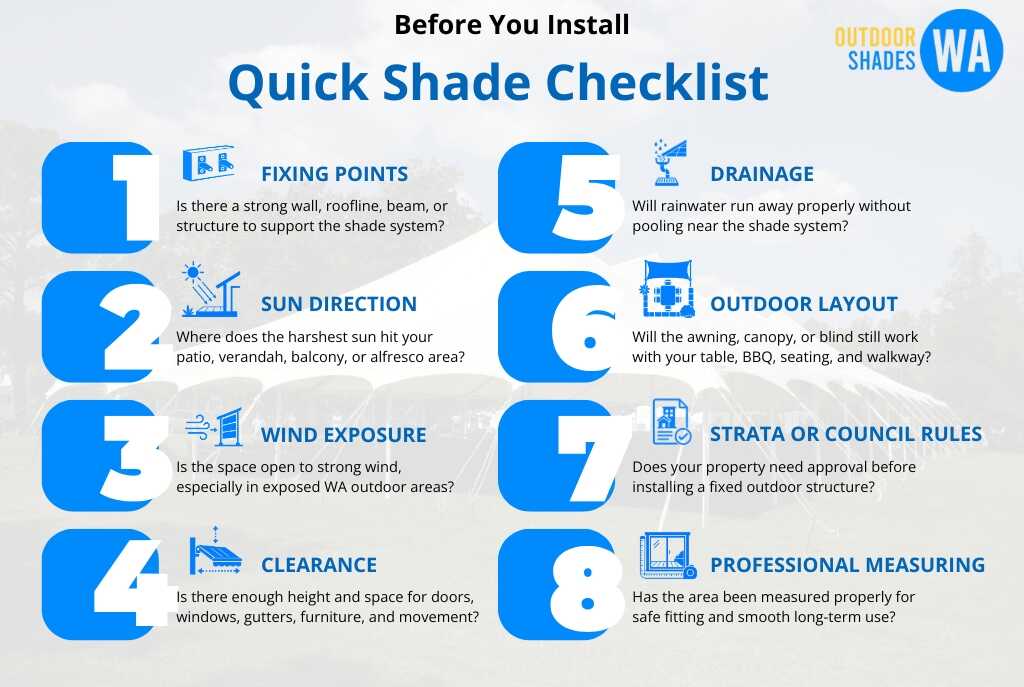
I always consider the installation first before recommending any awning vs. canopy option. A beautiful shade system is only as effective as the structure in which it is installed and the way you use it.
For an awning vs canopy decision, I check:
- Wall or roof fixing points
- Wind exposure
- Sun direction
- Drainage
- Door swing and furniture placement
- How often the space will be used
An awning can feel very natural on a patio, verandah, or alfresco because it is attached to the house. However, the fixing point must be sufficiently strong, and the projection must fit the space.
With canopies, I’m more focused on stability, posts, drainage, and wind. A few WA councils have regulations relating to outdoor structures. For instance, some pergolas may be exempt from permits only if they adhere to certain height, area, and wind region restrictions.
There is another level of maintenance required for strata homes. Renewals in strata schemes may require strata company approval, particularly if they affect common property.
Similarly, at Outdoor Shades WA, we handle the installation of outdoor shades and blinds by measuring, carefully planning, and ensuring a professional fit, ensuring they operate flawlessly year after year.
So, Should You Choose an Awning or a Canopy?
When choosing between awnings and canopies, keep it simple: start with the shade’s location.
Choose an awning if the space is attached to your home. Patios, decks, balconies, verandahs, and alfresco areas usually suit an awning because it feels built into the house.
If the space is attached, select an awning. If the shade needs to be placed away from the house, choose a canopy.
Then ask: is the problem overhead sun or side discomfort?
- Overhead sun: compare awnings & canopies.
- Attached outdoor living: consider an awning.
- Freestanding shade: canopy may suit better.
- Side sun, wind, rain, glare, or privacy: consider outdoor blinds.
The awning vs. canopy solution will depend on your home, as it needs to be appropriate to the climate and the home’s direction. For maximum comfort, awnings and canopies are often best used with blinds.
Conclusion: The Right Shade Depends on How You Use the Space
At the end of the day, the right choice between awnings and canopies depends on how you use your outdoor space. Awnings and canopies both provide shade, but they solve different problems.
Awnings are usually best for patios, decks, balconies, windows, verandahs, and alfresco areas connected to the home.
Canopies often suit freestanding spaces like gardens, pool areas, play zones, or temporary entertaining areas. Before choosing, think about sun direction, wind, rain, privacy, and whether you need overhead shade, side protection, or both.
At Outdoor Shades WA, we help homeowners choose and install outdoor shade systems, including awnings, outdoor blinds, and custom shade solutions.
Speak with our team to find the right fit for your home.