If you are in need of blinds or awnings to be installed in your outdoor space, I can tell you that choosing the right awning material is one of the most important decisions you’ll make for your outdoor space, as someone who’s worked with outdoor blinds here in Perth for years.
It’s not just about how it looks; your choice of outdoor blind fabric directly affects how well your awning performs in harsh sun, coastal winds, and sudden weather changes.
The reality is, not all fabrics for awnings are built the same. Some are designed to handle intense UV exposure without fading, while others focus more on airflow and comfort.
Understanding what an awning is and the materials used for it will determine how durable your setup is, how much protection you get from the elements, and how comfortable your space feels day to day.
In this guide, I’ll walk you through what to look for and help you narrow down the best fabrics for outdoor awnings, so you can confidently choose the option that suits your space and lifestyle.
What to Look for in Outdoor Awning Fabrics
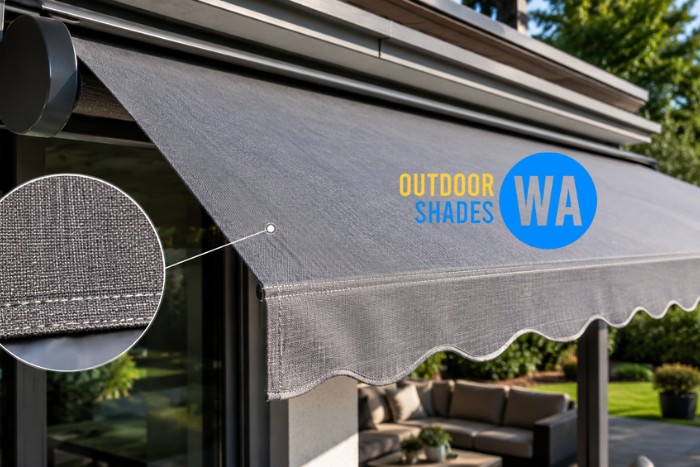
When selecting the best fabrics for outdoor awnings, it is not just about appearance; it is also about functionality in the actual outdoor environment.
The right awning material can be the difference between something that lasts for years and something that fades after one season.
The following should be considered when comparing the various fabrics for awnings.
Weather Resistance
Your awning fabric must resist sun, rain, and wind without disintegrating.
High-quality materials used for the awningsare designed to resist moisture, mildew, and structural wear. For example, acrylic fabrics naturally repel water and dry quickly.
When the weather can swing wildly from intense sunshine to heavy rain, as in Australia, it is important to select a weatherproof outdoor blind material to ensure durability.
UV Protection
One of the most significant (and the least considered) aspects of choosing the best outdoor patio awnings is UV protection.
Sun exposure does not just cause fabric to fade; it also deteriorates the fibres over time. UV-resistant materials help maintain the strength, colour, and lifespan of fabrics, and even protect people and furniture beneath them.
Solution-dyed acrylic fabrics, for example, can offer UPF 50+ protection and maintain colour for many years, as the pigment is incorporated into the fibre.
This renders UV protection an important aspect of a good-quality outdoor blind fabric, particularly in sunny areas.
Durability & Longevity
Not all fabrics last the same amount of time outdoors.
Acrylic is commonly regarded as one of the best fabrics for outdoor awnings because it resists fading, mould, or general wear. It can last 8-10 years or longer in outdoor situations.
Polyester, however, is cheaper but can depend on the coating, which wears out over time.
When comparing awning materials, consider the long term: a higher initial cost may mean fewer replacements and better performance over time.
Maintenance Requirements
Some fabrics are much easier to live with than others.
Outdoor blind material with low maintenance, such as acrylic, typically only requires regular cleaning to remain in good condition.
Meanwhile, less expensive alternatives might require more frequent servicing, particularly when coatings begin to wear or the material becomes wet.
It can also be a significant factor to use modern coatings, such as water-repellent or dirt-resistant coatings, which keep fabrics cleaner.
Aesthetics
Finally, there’s how your awning actually looks and feels in your space.
Today’s fabrics for awnings have a great selection of colours, textures, and patterns. Acrylic fabrics, especially, have good colour retention, so they remain bright even after years in the sun.
In addition to colour, consider the fabric’s impact on comfort. The correct aesthetic option must also match your home while still delivering performance.
Most Popular Fabric Types for Outdoor Awning
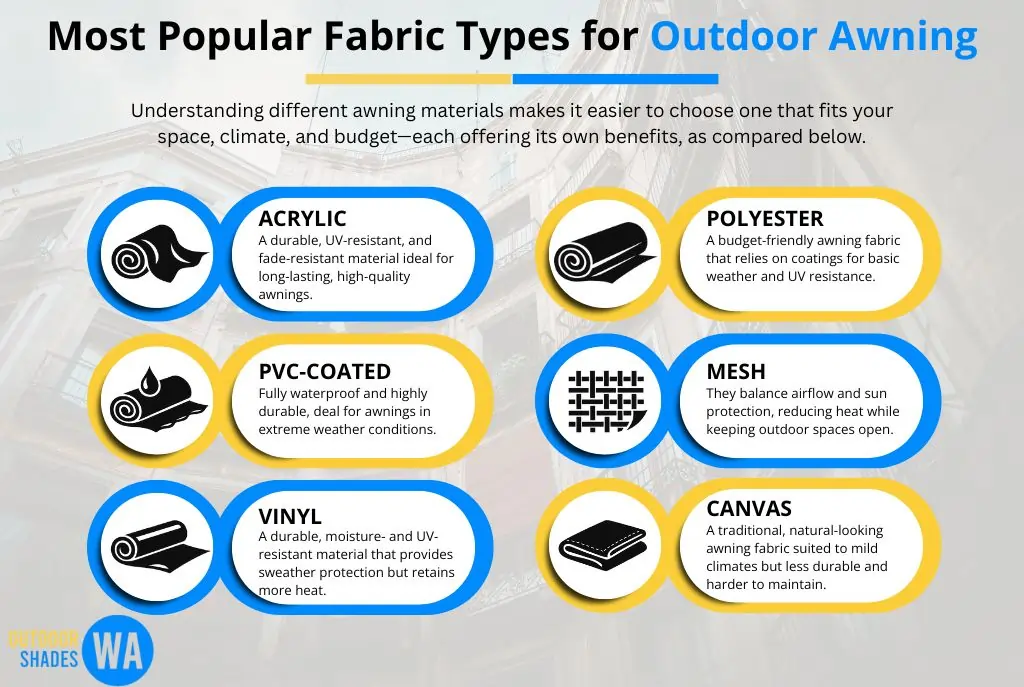
It will be much easier to select an awning that suits your space, climate, and budget by understanding the various materials used for awnings.
It also helps to understand how retractable awnings work, since the fabric needs to roll, extend, retract, and stay tensioned properly.
All awning materials possess their advantages, so here’s a comparison of the most widespread ones.
Acrylic Fabrics
Acrylic is generally regarded as one of the materials used for awnings, particularly for long-term use.
These are not just breathable fabrics that generate less heat under your outdoor awning; they are also highly fade-resistant.
Since the colour is dyed into the fibres (solution-dyed), acrylic holds up very well in intense UV conditions, an important factor when it comes to Australian conditions.
They also make a good option for high-quality systems, such as folding-arm awnings, where performance and aesthetics are important.
Exterior shielding is mostly done with high-quality acrylic fabrics because they are long-lasting and UV-stable.
Polyester Fabrics
Polyester is a more budget-friendly fabric for awnings, making it ideal if you seek a cheaper option.
Polyester itself is not as weatherproof, though it is often coated with protective materials to enhance waterproofing and UV resistance. This ensures it can be used lightly, e.g., on covered patios or in areas less exposed to harsh weather.
Coatings and finishes are key to the performance of fabrics in outdoor shading, particularly for outdoor blind material made of polyester.
PVC-Coated Fabrics
PVC-coated fabrics are a good choice when durability and waterproofing are paramount.
This awning material is completely waterproof and designed to withstand heavy rain, wind, and other harsh outdoor conditions.
It is typically installed in more protective systems, like straight drop blinds, where complete enclosure and weatherproofing are required.
Coated fabrics, such as PVC, are suitable for extreme weather conditions because they are resistant to moisture penetration and to structural breakages that cause degradation.
Mesh Fabrics
Mesh fabrics strike a balance between protection and airflow, making them a trendy outdoor option.
They allow air to pass through but block much of the sunlight, helping lower the heat without closing out the space altogether. This makes them an effective outdoor blind fabric for patios and entertainment areas.
Mesh will be common in applications such as ziptrak blinds, where blocking the sun is equally important as allowing air to flow through.
Using mesh shading can significantly reduce the amount of solar heat entering the building while still providing an outward appearance.
Vinyl
Another durable material is vinyl, which has good resistance to moisture and UV exposure.
Vinyl provides a more impervious protection than breathable fabrics, making it effective in wet or windy weather. It is frequently employed in business or places where the utmost security is necessary.
Vinyl is an outdoor blind material that can be cleaned and maintained with ease; however, it may retain more heat than a breathable fabric, such as acrylic or mesh.
Canvas
Canvas has a more traditional look and has been used for awnings for many years.
It is usually crafted from cotton or cotton blends and has a natural look that fits classic outdoor design. Nevertheless, canvas is more difficult to maintain than modern synthetic materials and might not be as resistant to mould and UV damage as it gets older.
In milder climates, canvas can be used as awning fabric, particularly when a lighter look and style are important to you.
Comparing Popular Outdoor Fabric Brands
Brand choice may be as critical as the awning material when considering the best fabrics for outdoor awnings. Most fabrics may look similar, but variations in manufacturing, coatings, and fibre technology can have a drastic impact on performance.
Some of the popular fabric brands include:
- Visiontex
- Vistaweave
- Sattler
- Sunbrella
- Dickson
Below are factors to consider when choosing a brand:
Breathability
Breathability influences the level of relaxation in your outdoor location, particularly during hot weather.
Mesh fabrics such as Visiontex and certain Vistaweave ranges allow airflow while still reducing heat.
Sunbrella, Dickson, and Sattler are brands that use acrylic fabrics, which are less open yet still breathable than fully coated ones.
Mesh-style awning fabrics are typically better suited when airflow is a priority.
UV Protection Levels
To achieve maximum exposure to sunlight, high-quality acrylic brands can be the best long-term commitment.
Sunbrella, Dickson, and Sattler (solution-dyed acrylics) are known for their long-term UV stability and colour retention.
Depending on colour and construction, Dickson fabric can block up to 100% of UV rays.
Visibility vs Privacy
Different brands offer different balances between seeing out and blocking in. If maintaining your view is important, go for mesh-based outdoor blind fabric.
Mesh fabrics (Visiontex, Vistaweave) offer exterior visibility while lessening glare.
Acrylic fabrics (Sunbrella, Dickson, Sattler) are usually solid, which provides greater privacy and shade.
Choosing the Right Fabric for Your Setup
Fabrics for awnings are not made equal, and more importantly, not all awning materials are made to fit all spaces. The most appropriate option will depend on how you intend to utilise your outdoor space, how much protection you require, and the comfort you seek.
Here’s how to match the right outdoor blind fabric to your specific setup.
For Patios & Entertaining Areas
If you want to build a cool, practical home environment for relaxing or entertaining, airflow should be one of your top priorities.
Breathable fabrics (mesh or woven acrylic) allow hot air to escape, keeping the area underneath cooler.
This is particularly essential in warmer weather, when the trapped heat can make outdoor spaces uncomfortable.
Studies indicate that breathable awning fabrics enhance ventilation and reduce heat accumulation as air flows through, while blocking sunlight.
For Full Outdoor Protection
When you want the utmost protection against the elements, then durability and waterproofing are the key.
Heavier materials used for the awnings, like PVC-coated fabrics or vinyl, provide a good barrier against rain and wind. They are made of fabrics that neither allow water to penetrate nor are damaged under more severe conditions.
They are commonly used in setups like roof-to-fence blinds, where the aim is to enclose a space and keep it out of unpredictable weather. They are not as breathable, but provide good year-round cover.
For Modern Smart Homes
In the case of new houses or renovated backyards, compatibility is as important as performance.
Most systems today are designed to be compatible with motorised outdoor blinds, so the outdoor blind fabric must be flexible, strong, and lightweight to operate easily.
As per industry recommendations, fabric awnings are usually incorporated with motorised systems to enable easy manipulation of light, shade, and ventilation.
In this case, high-quality acrylic or polyester-based awning material is often preferred, as it balances strength with ease of movement.
For Versatility
If you’re looking for something that can work across different applications, versatility is key.
Certain awning fabrics can be used in various configurations. These adaptable materials can be found in a wide variety of outdoor blinds products, making them a viable solution if you wish to maintain consistency in both functionality and aesthetics.
Common go-to options are acrylic and coated polyester, which offer a trade-off between durability, UV resistance, and flexibility across a variety of installations.
Cost vs Quality: What Should You Expect?
When deciding on the different fabrics for awnings, the type you choose is a major factor not only in the amount of money you spend at the start, but also in the longevity of your system.
General Pricing Factors
- Fabric Quality: One of the biggest factors influencing price of outdoor blinds is the quality of the materials used for the awnings. Higher-end fabrics, such as solution-dyed acrylic or PVC-coated fabrics, are more expensive to purchase initially. Still, they last longer and are not prone to fading, mould, or weather damage.
- Size of Installation: Bigger awnings need more outdoor blind fabric, more structural support, and more labour to install. In Australia, a small awning can cost a few dollars while a large installation can cost a few thousand dollars, depending on the scale.
- Customisation: The price can increase because of custom colours or patterns, motorisation or automation, and special coatings or finishes. More complicated systems (mostly motorised ones) are also more expensive, as they require additional components and installation labour.
Maintenance Tips to Extend Fabric Life
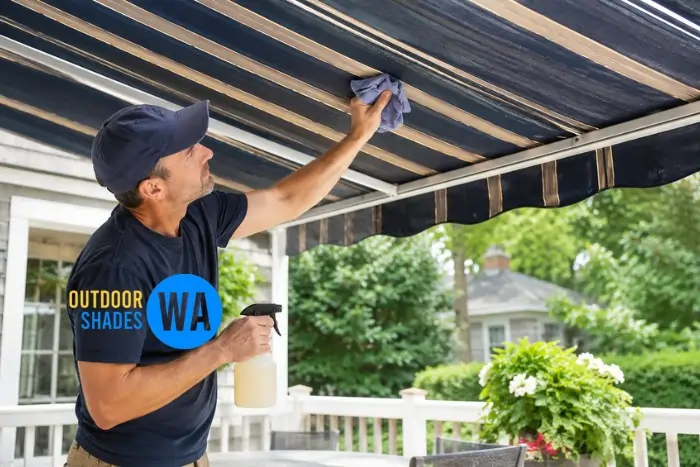
Even the finest materials used in outdoor awnings require some maintenance to keep them looking good and working well over time. The good news is that with a few habits, you can save a lot of money on awning material replacement even before it reaches its end.
Regular Cleaning Habits
Keeping your awning clean is one of the easiest ways to maintain any outdoor blind fabric.
Over time, dust, dirt, and debris may accumulate. Most fabrics for awnings can be cleaned gently with a few times of light soap and water. Do not use harsh chemicals or high-pressure washing, as these may damage protective coatings or weaken the fibres.
The Australian Government Department of Health recommends that outdoor surfaces be cleaned regularly to minimise the accumulation of contaminants, such as mould spores and allergens, which can negatively impact health and the fabric condition.
Preventing Mould and Mildew
Moisture is one of the biggest threats to any awning material.
Synthetic outdoor blind materials such as acrylic and PVC are more resistant to mould than natural fibres, but no material is completely resistant. Moisture retention and poor airflow are key contributors to mould growth on outdoor materials.
Check here: How to Clean Mould Out of Outdoor Blinds
Seasonal Care
Different seasons may also affect your awning, so it may be worth adjusting your care schedule accordingly.
- Summer: Rinse off dust and pollutants more frequently, especially in dry or coastal areas
- Rainy seasons: Check for water pooling and ensure proper drainage
- Windy conditions: Retract awnings during strong winds to avoid unnecessary strain
Being proactive will help ensure the materials used for the awnings are not damaged or worn down unnecessarily.
Replace Fabric
Even with proper care, every outdoor blind fabric has a lifespan.
Quality fabrics usually have a lifespan of 8-15 years, depending on exposure and maintenance.
Find the Right Outdoor Awning Fabric with Outdoor Shades WA
There’s no one-size-fits-all when it comes to choosing the awning material. The best fabrics for outdoor awnings will always depend on your space, how you use it, and the conditions it’s exposed to.
If you’re still unsure which direction to take, getting expert advice can make all the difference. At Outdoor Shades WA, we help you compare different materials used for the awnings, understand your options, and choose a solution that actually works for your home.
If you want to get it right the first time, we’re here to help.
Get in touch with us today to find the perfect fabrics for awnings tailored to your space, budget, and lifestyle.